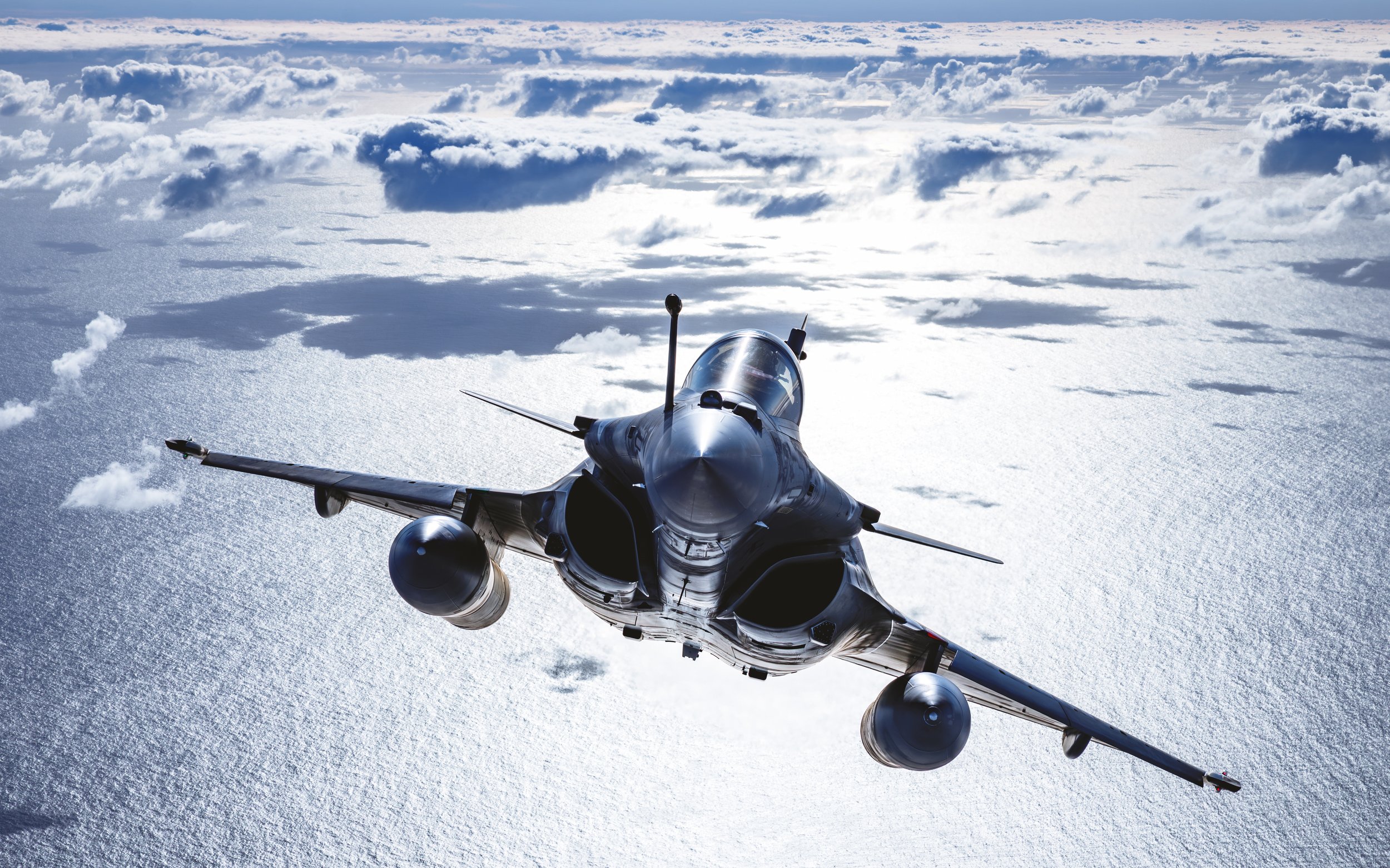
PEGASE 26 — How France Projects Air Power Across 40,000 Kilometers
Inside the French Air and Space Force deployment from La Réunion to Egypt, with
Rafale, A330 MRTT Phénix and A400M Atlas crews.
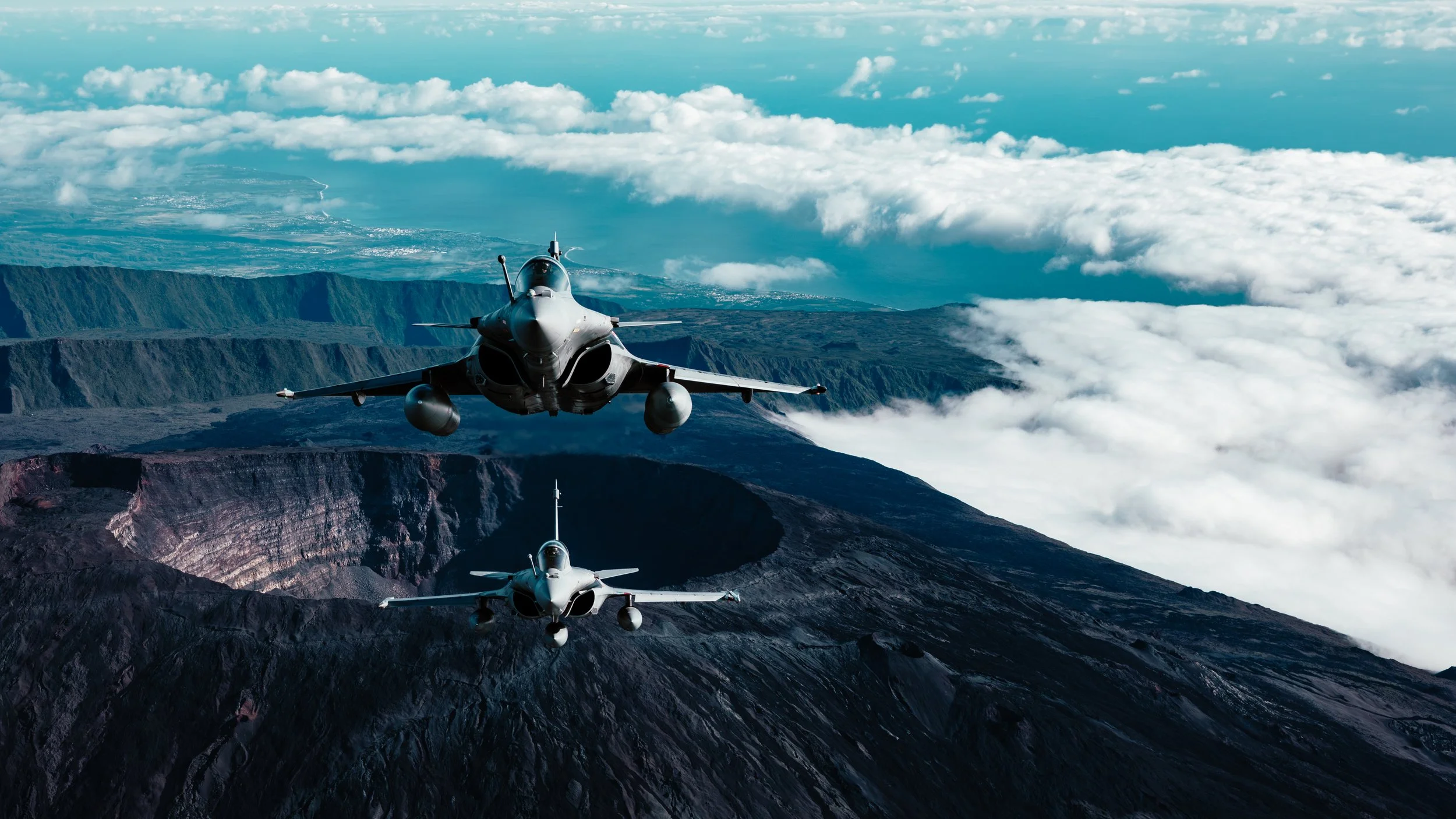
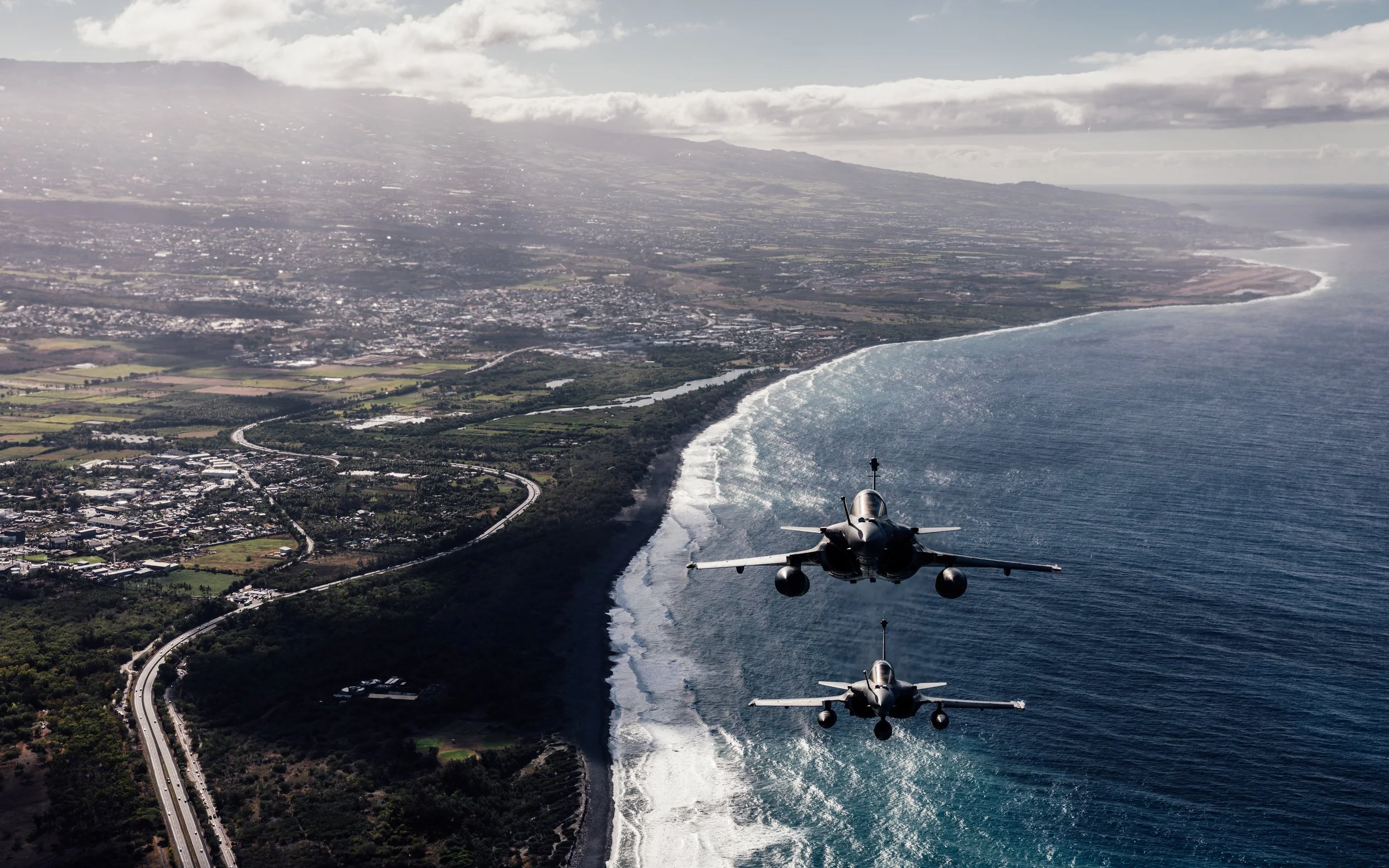
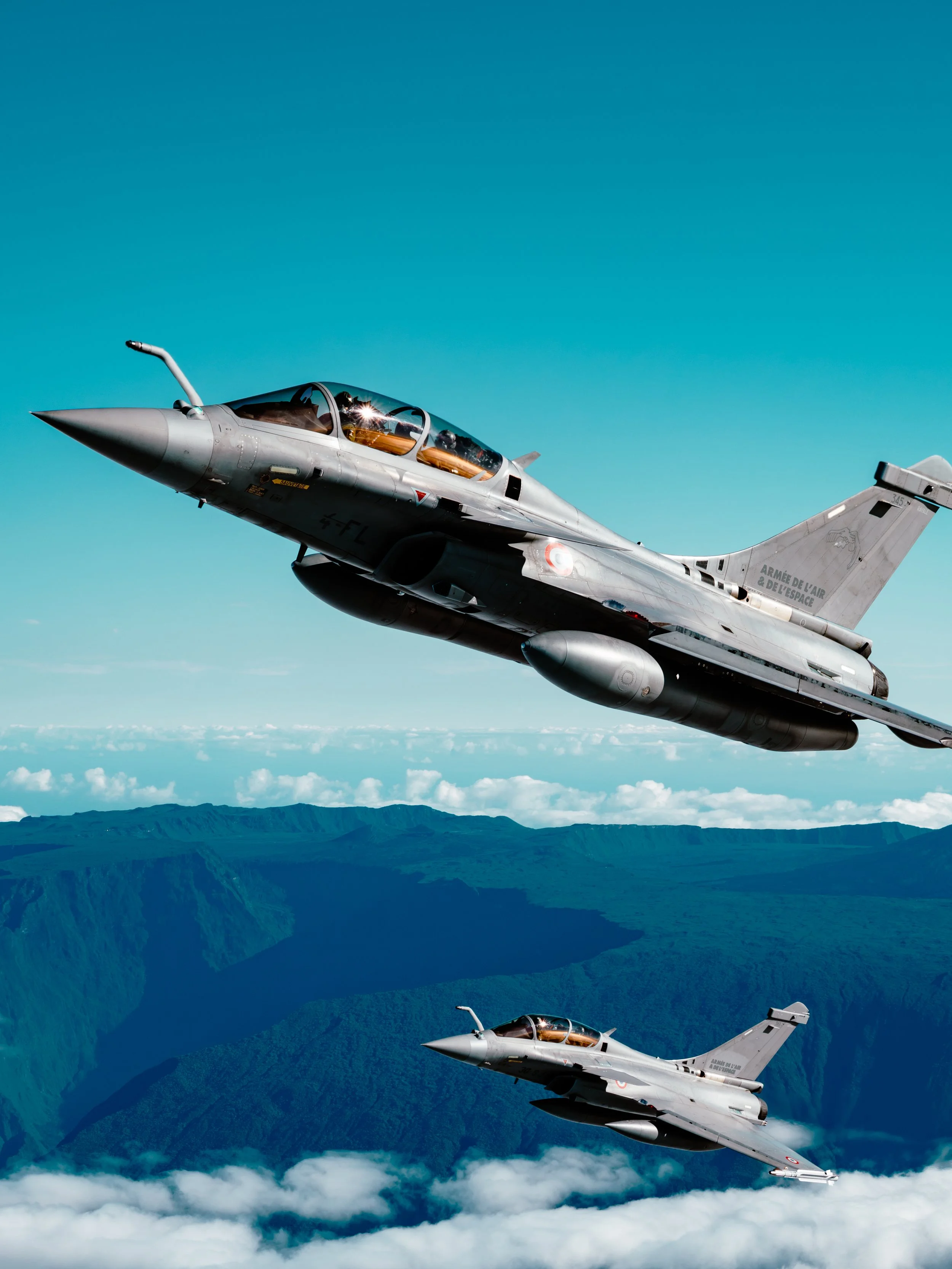
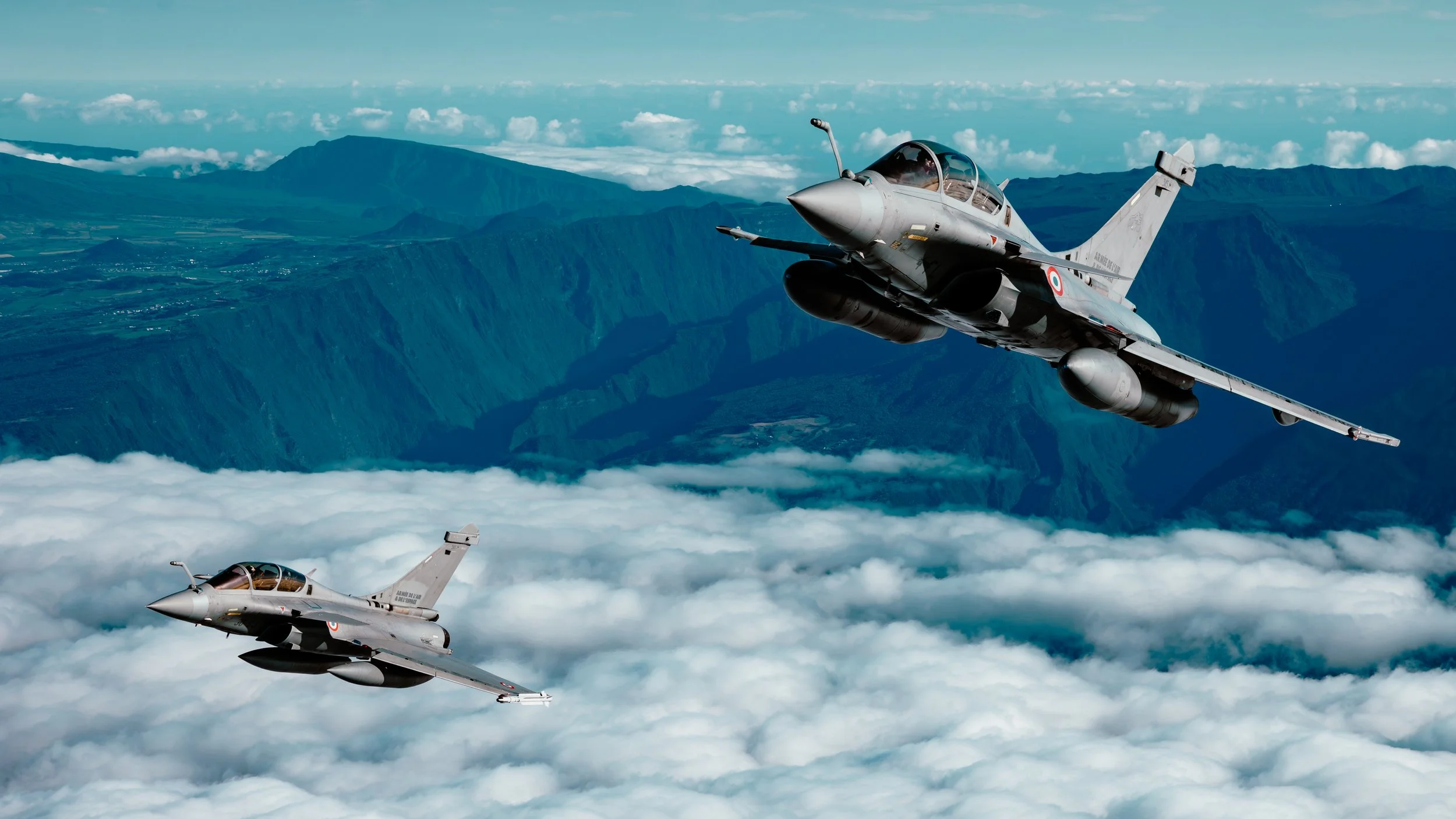
“Two French Air and Space Force Rafales fly above Piton de la Fournaise, the active volcano on La Réunion.”
PEGASE 26: How France Projects Air Power Across 40,000 Kilometers
From the Arctic to the Indo-Pacific and onward to the Middle East, PEGASE 26 was designed to test more than range. Steel Wing Stories joined the deployment at La Réunion and followed the convoy towards Egypt to examine the planning, logistics, maintenance, air-to-air refuelling and human coordination behind a long-range combat-air deployment.
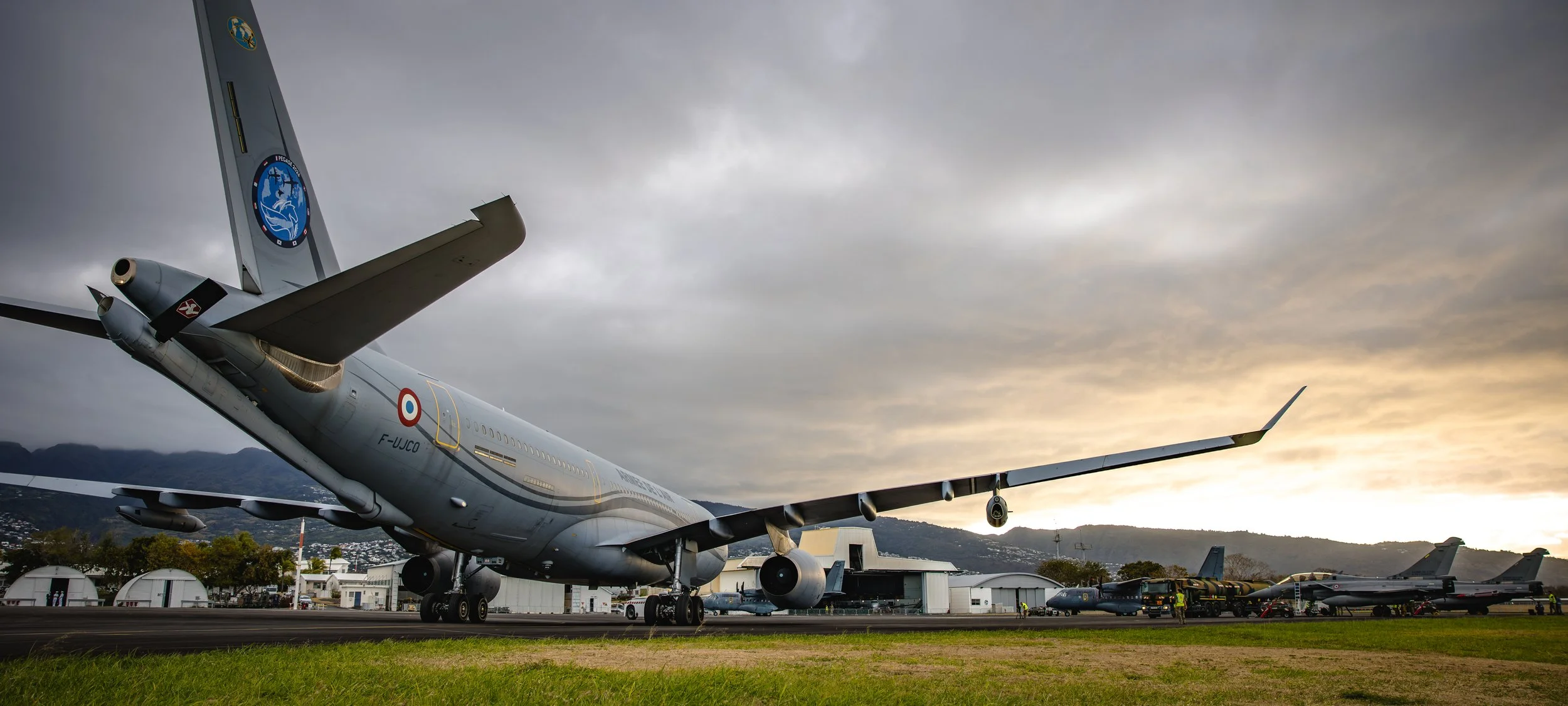
On 7 October 2026, the La Réunion element of PEGASE 26 prepared to leave the Indian Ocean and continue towards Egypt. By that point, PEGASE 26 had already crossed some of the longest and most demanding sectors of the deployment, moving from Europe through the Arctic and North America before continuing across the Pacific and Indo-Pacific.
Yet the departure from Air Base 181 Roland-Garros was not simply another entry on a route map. It was the visible end of a process that had started months earlier. Every item of freight had to be in the correct aircraft. Every fighter had to be technically available. Fuel requirements, air-to-air refuelling points, weather, NOTAMs, frequencies, diplomatic clearances, diversion airfields and emergency procedures had all been reviewed. The aircraft then had to leave at the planned time, because a delay at one point could affect the rest of the package and the next stage of the deployment.
At La Réunion and during the onward convoy, Steel Wing Stories followed the deployment beyond the cockpit, with access to Rafale crews and maintainers, A400M personnel, logistics operations, mission planning and the A330 MRTT refuelling station.
Taken together, those perspectives show that PEGASE 26 was not principally a story about nine aircraft flying around the world. It was a demonstration of whether a compact force could move, sustain itself, remain technically available and be ready to operate again after each long-distance displacement.
A Global Deployment Built Around Three Aircraft Types
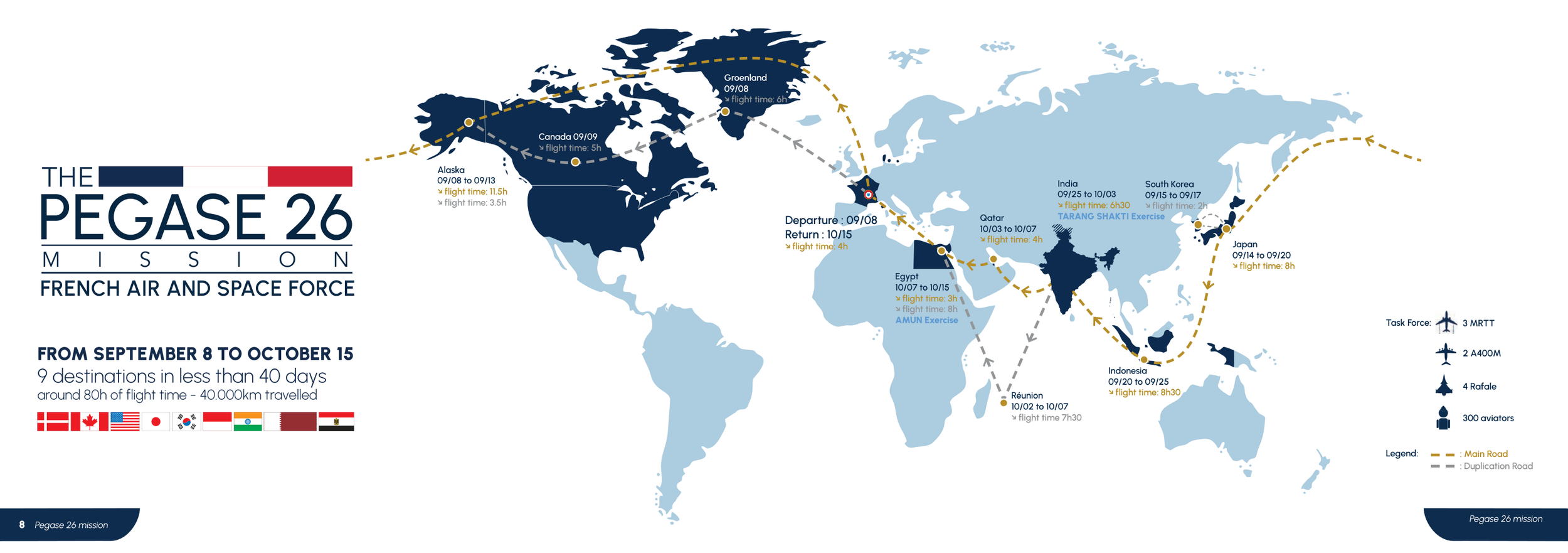
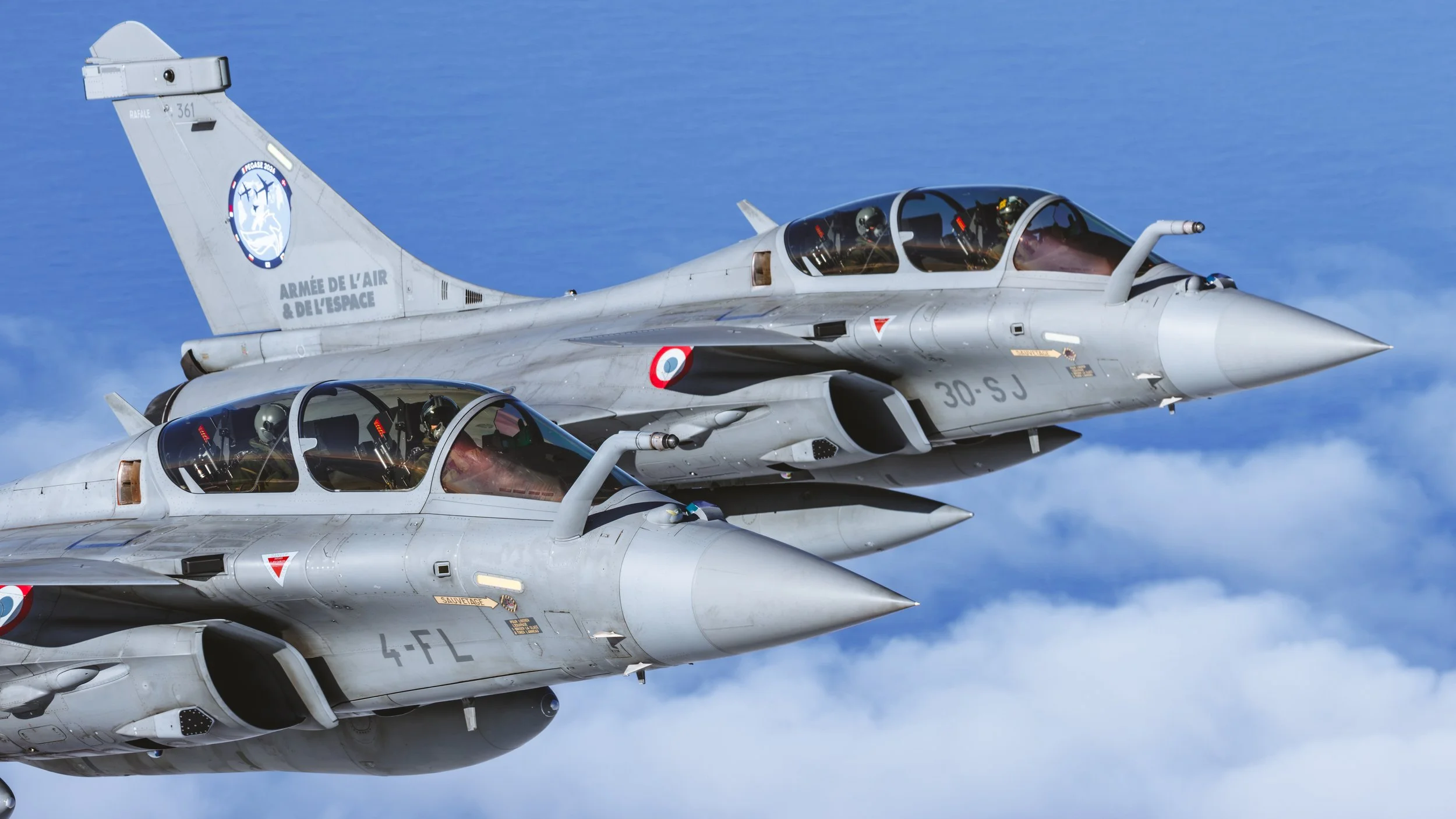
Conducted from 8 September to 15 October 2026, PEGASE 26 was the seventh long-range deployment of its type conducted by the French Air and Space Force. Its route linked the Arctic to the Indo-Pacific before continuing towards the Near and Middle East. The full force consisted of four Rafale F4 fighters, three A330 MRTT Phénix tankers and two A400M Atlas transports, supported by around 300 aviators.
The itinerary moved through the Arctic and North America before continuing through Japan, South Korea, Indonesia, India, La Réunion, Qatar and Egypt. The deployment also included multinational training, notably Tarang Shakti in India and AMUN 26 in Egypt.
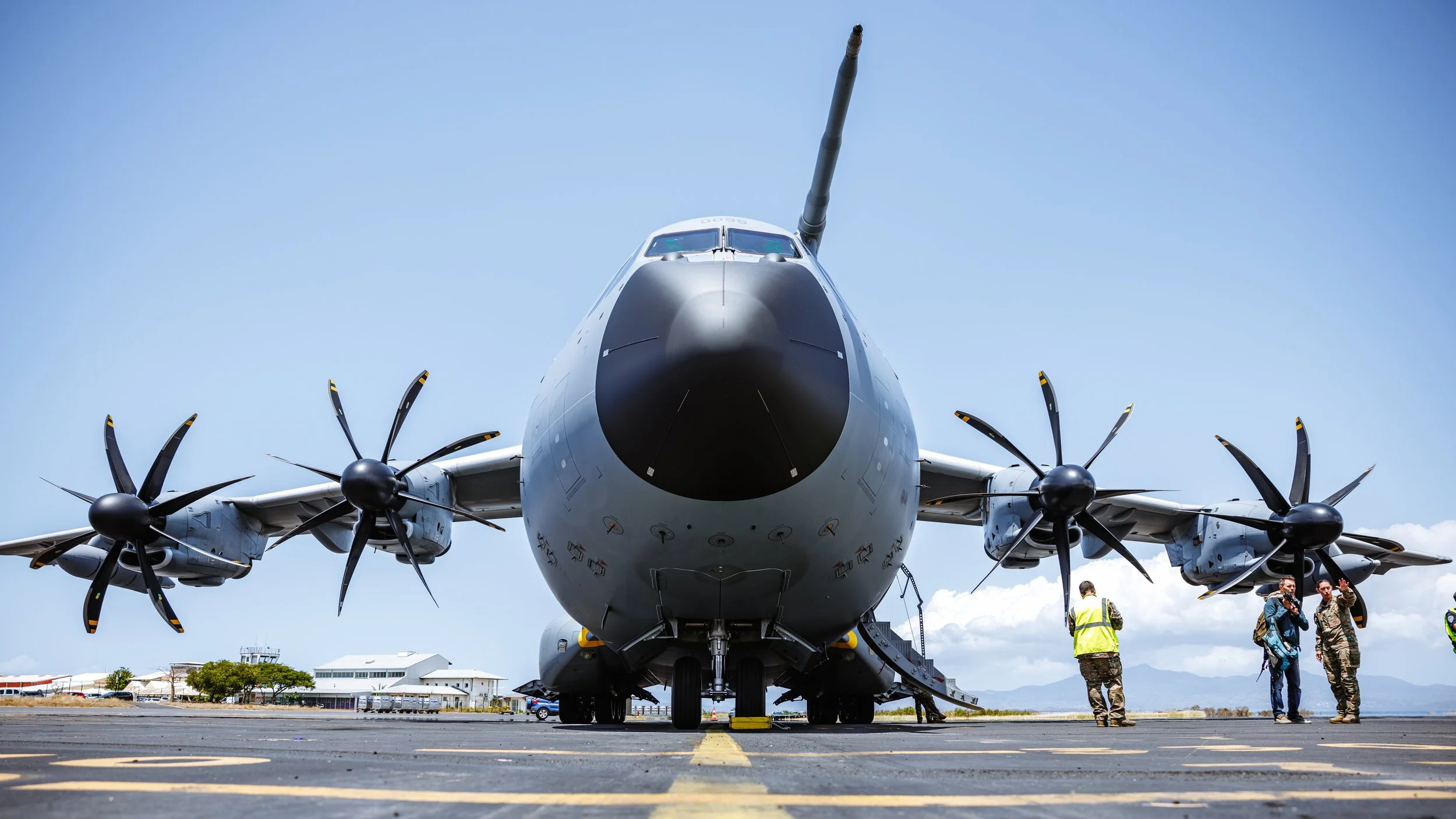
The three aircraft types complement one another. The Rafale provides the combat capability. The A330 MRTT gives the fighter force the fuel and strategic reach required to cross intercontinental distances while also moving personnel and freight. The A400M adds tactical and strategic transport, support to the deployed force, an additional air-to-air refuelling capability and, during long over- water convoy segments, a search-and-rescue support role.
For the deputy mission commander, that combination is the basis of the force's operational and logistical autonomy. The measure of success is not only whether the aircraft can reach a distant partner or French overseas territory, but whether the detachment can begin operating from the new location the following day - or, where necessary, only hours after arrival.
“What PEGASE 26 also shows is that once we arrive at our destination, we are capable of operating from that platform the next day - or even a few hours later.”
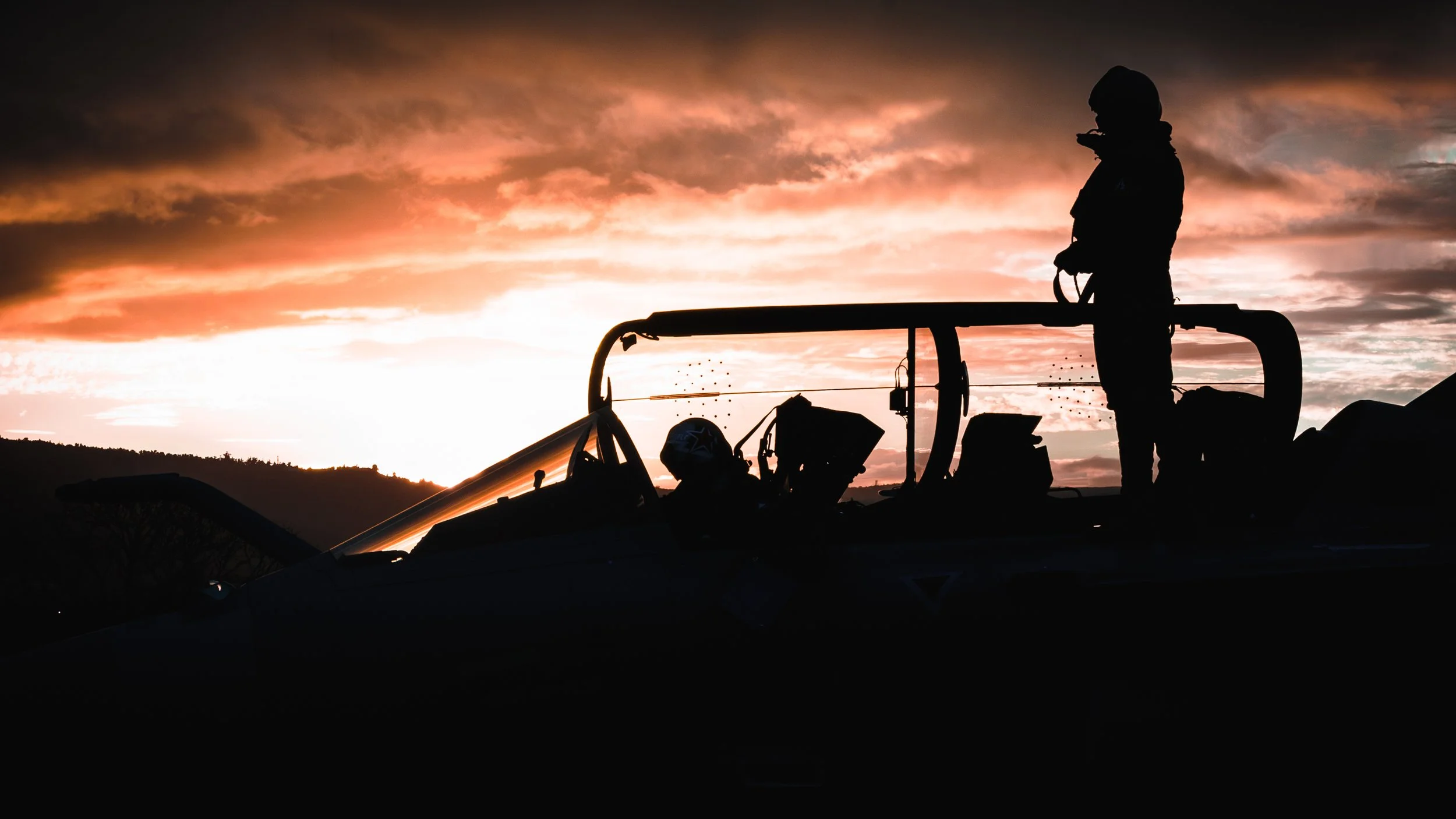
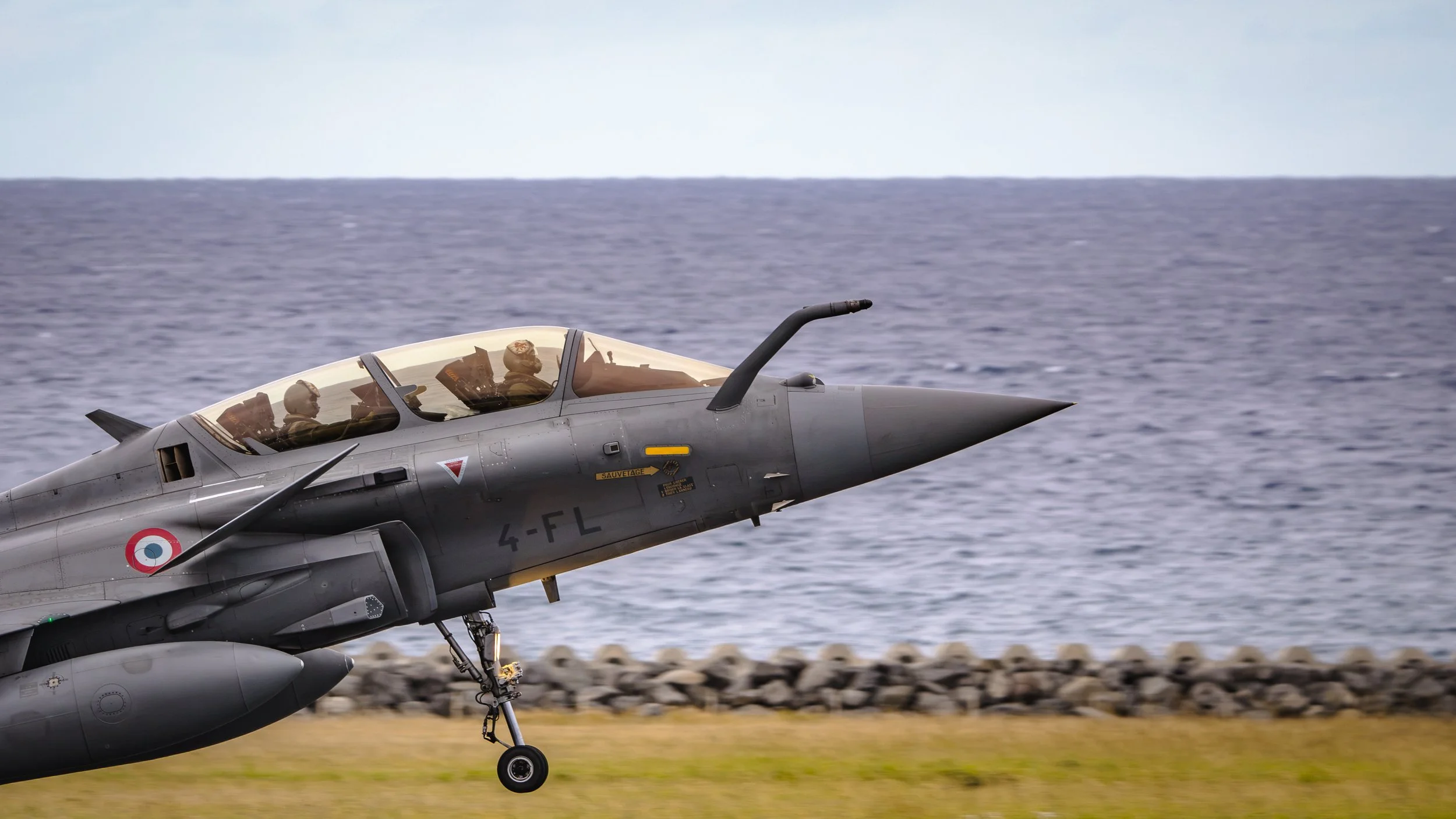
La Réunion: More Than a Stopover
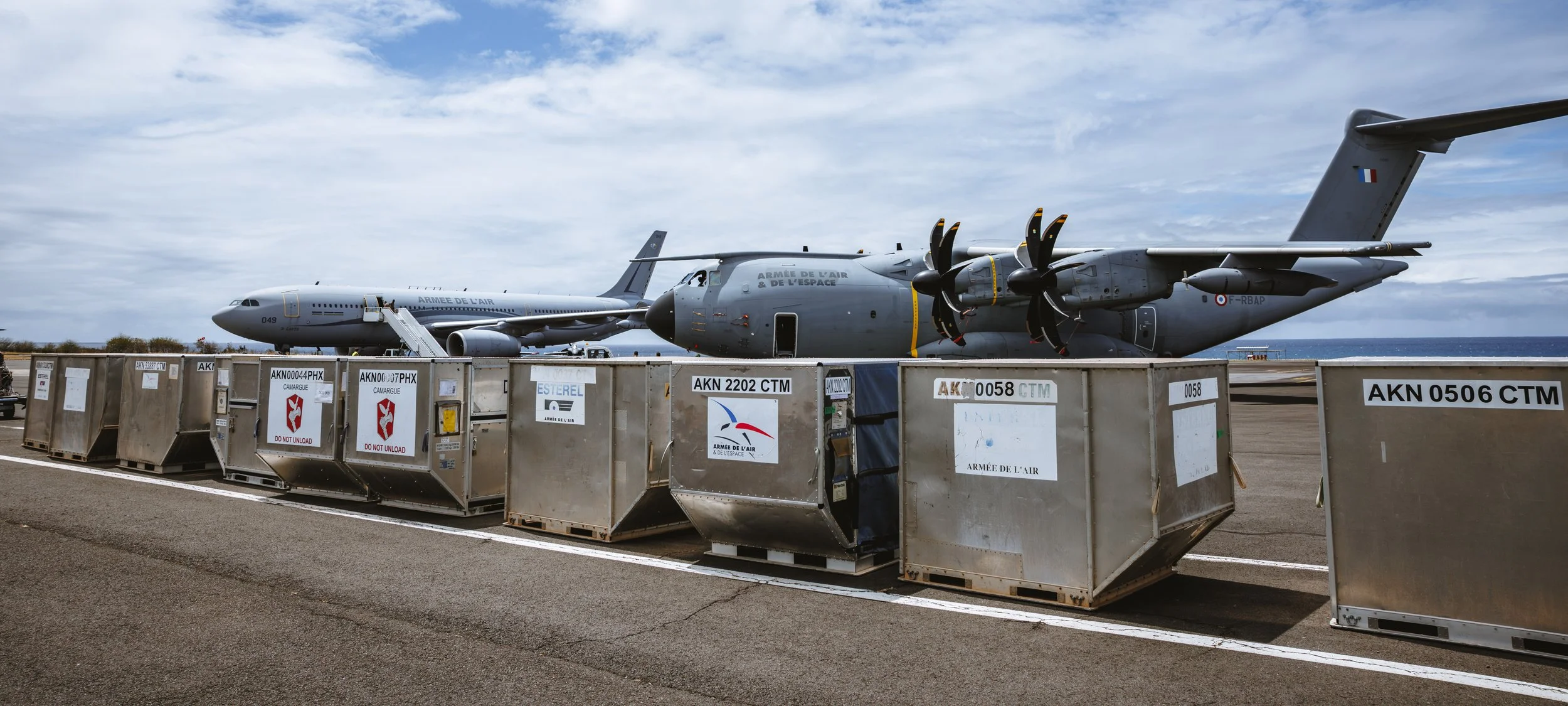
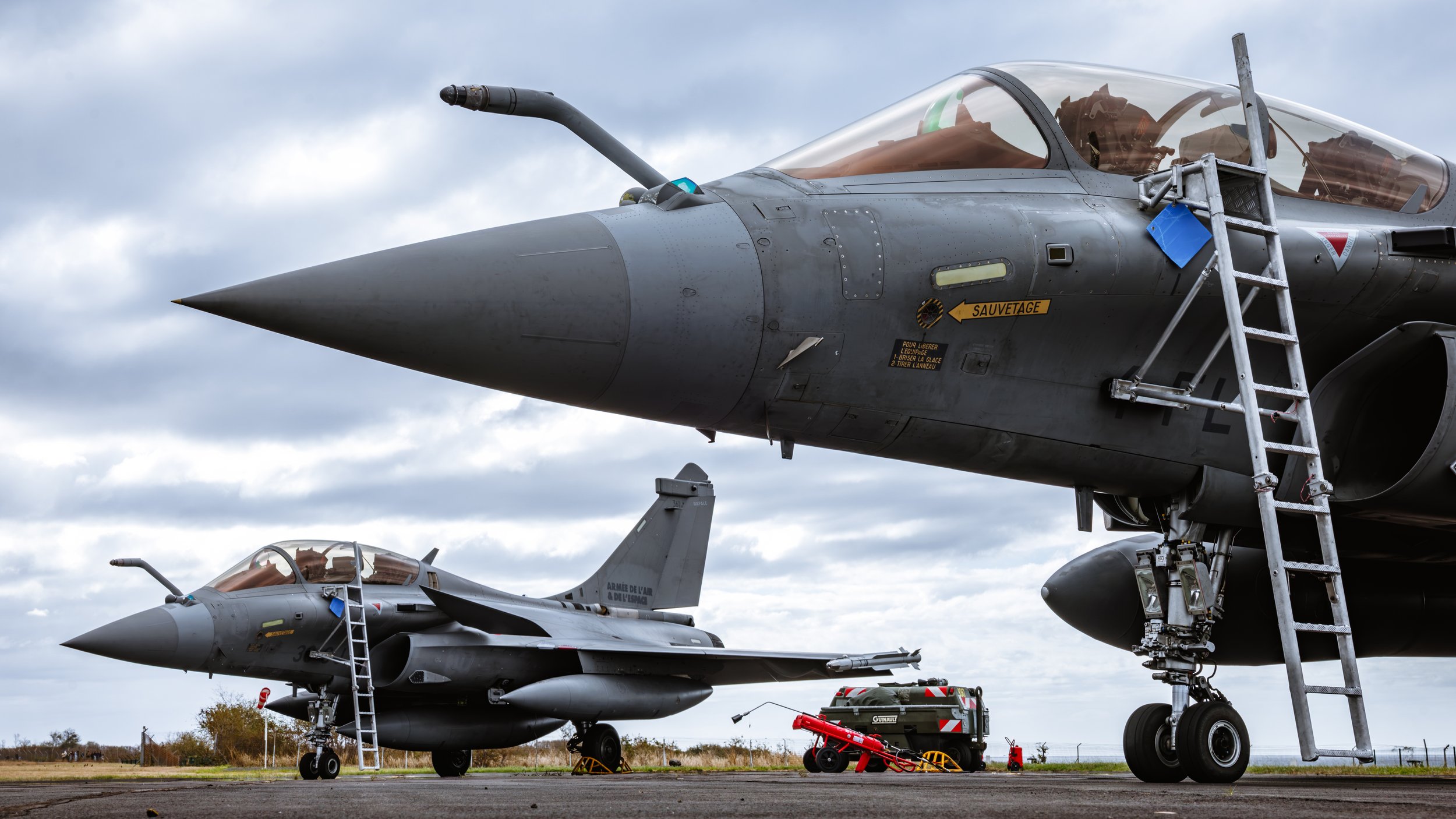
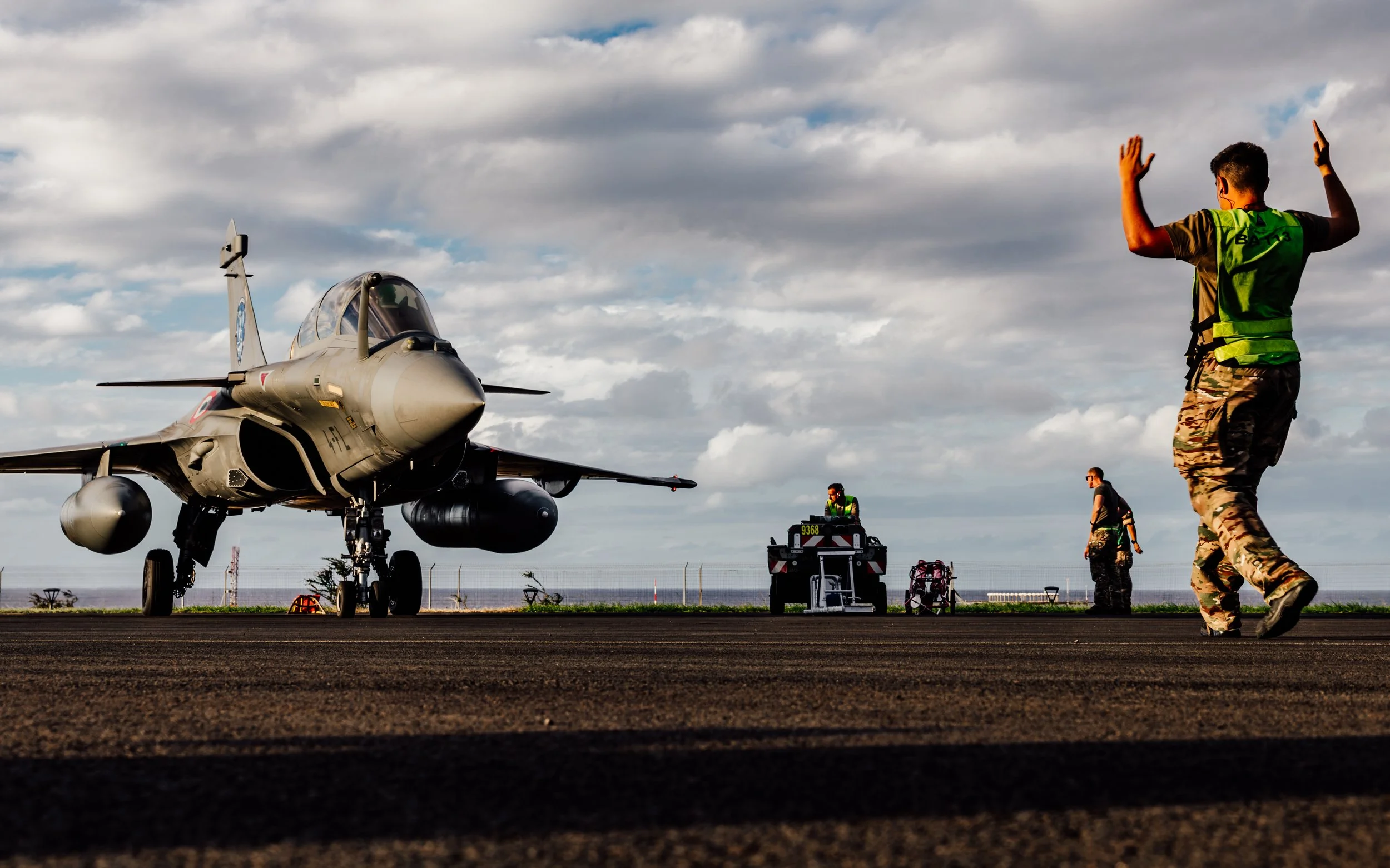
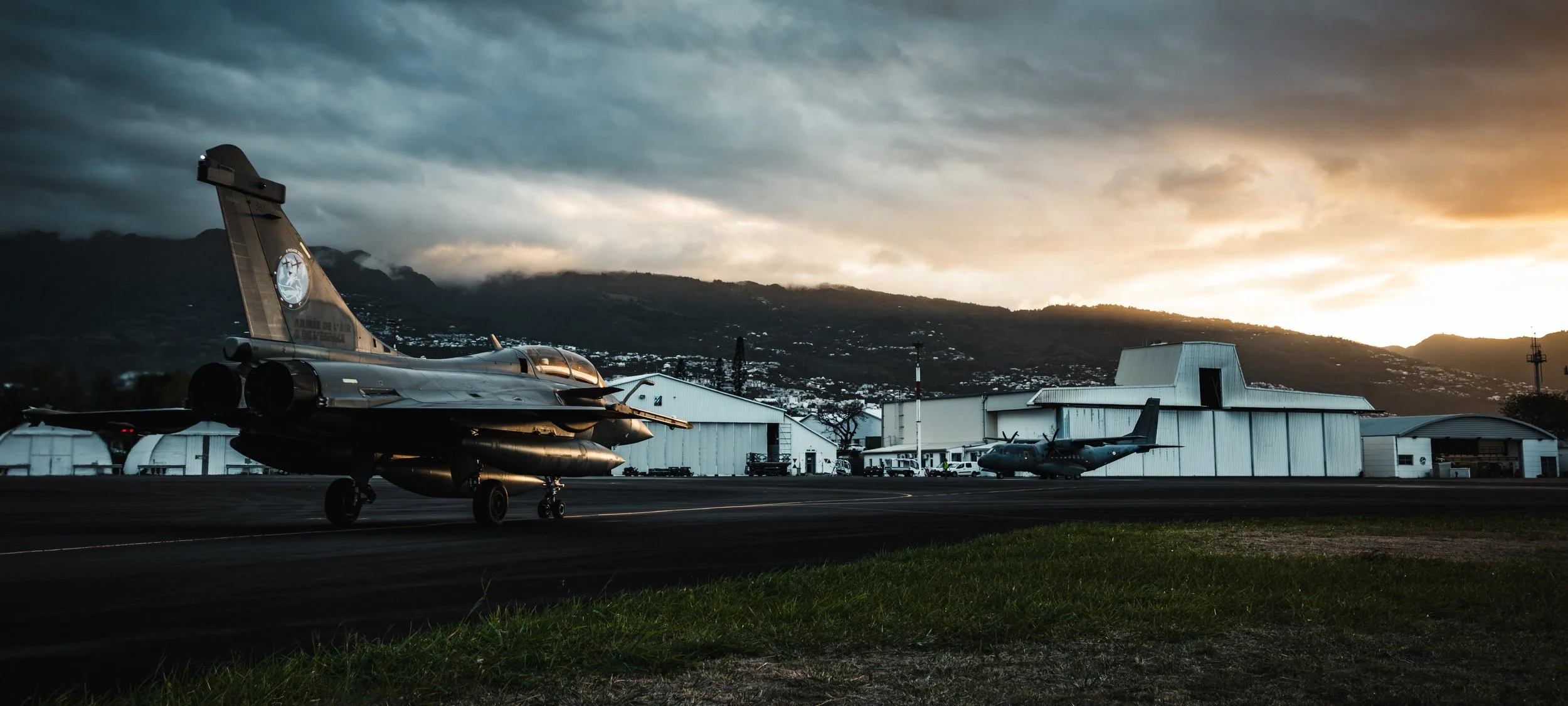
La Réunion occupied a particular place in the deployment. While one part of PEGASE 26 was operating through Qatar, the element on the island comprised two MRTTs, two Rafales and one A400M. That split illustrated another feature of the deployment: the force did not always move as a single block. Aircraft, personnel and freight had to be distributed according to the activity planned at each location and then brought back into a coherent flow for the following stages.
For the French Air and Space Force, La Réunion is also an operational support point in its own right. Air Base 181 Roland-Garros supports the French Armed Forces in the Southern Indian Ocean Zone (FAZSOI) and can receive large air detachments at short notice. After Cyclone Chido, the base served as a logistics hub for the air bridge between mainland France and Mayotte, supporting rotations by CASA aircraft, A400Ms and A330 MRTTs that carried humanitarian aid and reinforcement personnel.
Within PEGASE 26, the stop also served the wider objectives of maintaining a visible French capability in the Southern Indian Ocean, supporting the French overseas territories and demonstrating that a force arriving from a long-distance deployment could rapidly begin new flying activity from a forward location.
The contrast between the visible and invisible parts of the deployment is particularly clear from the Rafale side. A low-level flypast is immediately visible to the public; the long ferry sectors, hours of preparation and complex high-altitude tactical missions flown with partner air forces are far less apparent. Across roughly forty days, crews moved through dramatically different environments while continuing to train and operate along the route.
Before the Engines Start: Building the Convoy
Planning the convoy from La Réunion towards Egypt followed a structured sequence, breaking the flight into clearly defined phases before any aircraft moved.
The briefing began with the players: which aircraft were participating and how the package was composed. From there came the overall mission overview and routing, followed by weather and NOTAM analysis. The team then checked the detailed timeline - checks, departure times, join-up, refuelling and arrival - before reviewing the communications plan and the frequencies to be used during the crossing.
The departure and join-up phase defined how aircraft would leave their respective positions and form the MRTT-Rafale package in the air. The air-to-air refuelling plan identified where the fighters were expected to take fuel. Diversion planning examined usable airports and runways if an aircraft suffered a technical problem or could no longer continue as planned. Arrival planning then covered the split of the package and the coordination required to place the different aircraft onto their destination runways.
The final parts of the briefing were deliberately focused on contingencies rather than the nominal plan. A 'What If' section examined delays and the criteria that could result in a no-go decision. Safety items included radio failure, anti-collision procedures and reminders of events that could occur in flight.
That structure is important because it demonstrates how a long-range convoy is planned. The mission is prepared both for what should happen and for what might go wrong.
Diplomatic Clearances and the Timeline
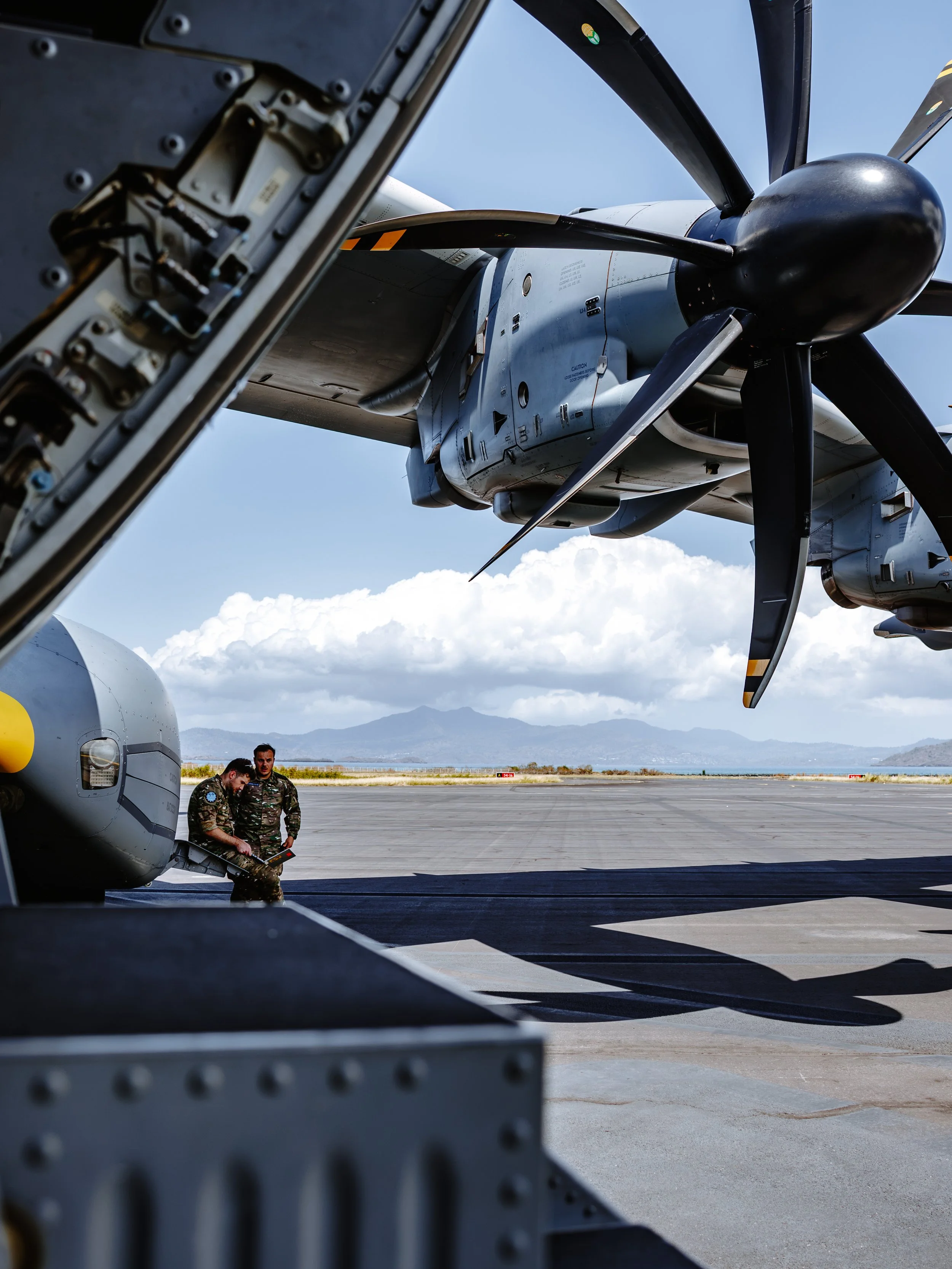
Some of the most demanding work sits outside the cockpit. One of the areas requiring the greatest anticipation is coordination between command centers in France and the countries whose airspace the formation will cross.
An overflight is not simply a line on a chart. It requires the appropriate diplomatic authorisation for a particular country, on a particular date and within the required timing. The same principle applied to aircraft moving from Qatar and to the package leaving La Réunion for Egypt.
The time dimension links directly to logistics. The aircraft are expected to depart at the planned hour, not simply 'sometime that morning'. A delay can shift a join-up, affect the timing of the next refuelling, push the package outside an approved overflight window, complicate an arrival slot and create consequences for the next stage of the deployment.
That explains why the planning team studies the timeline as a system rather than a series of independent events. A convoy covering thousands of kilometres only works if the individual parts remain synchronized.
The Logistics Race Before H-Hour
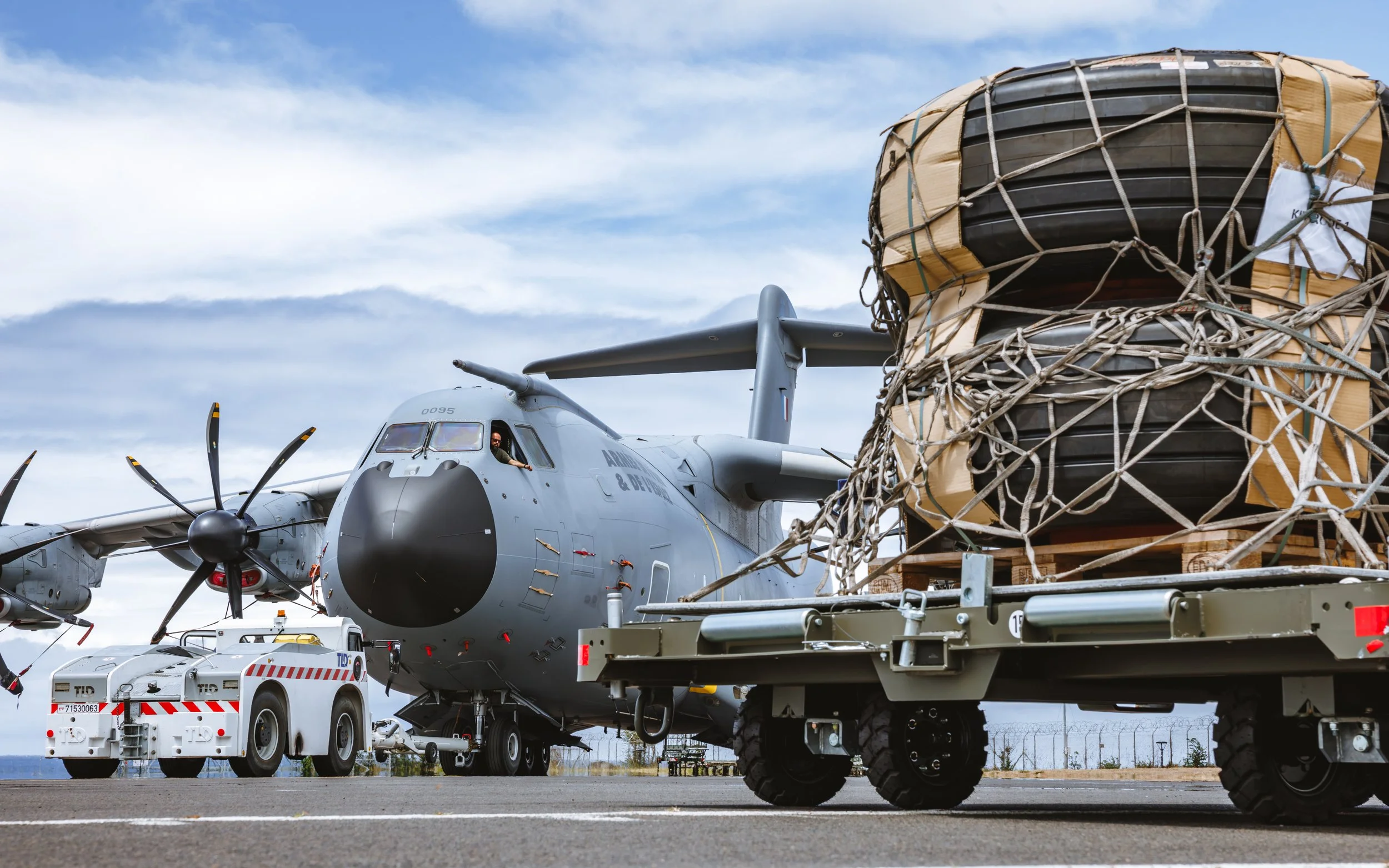
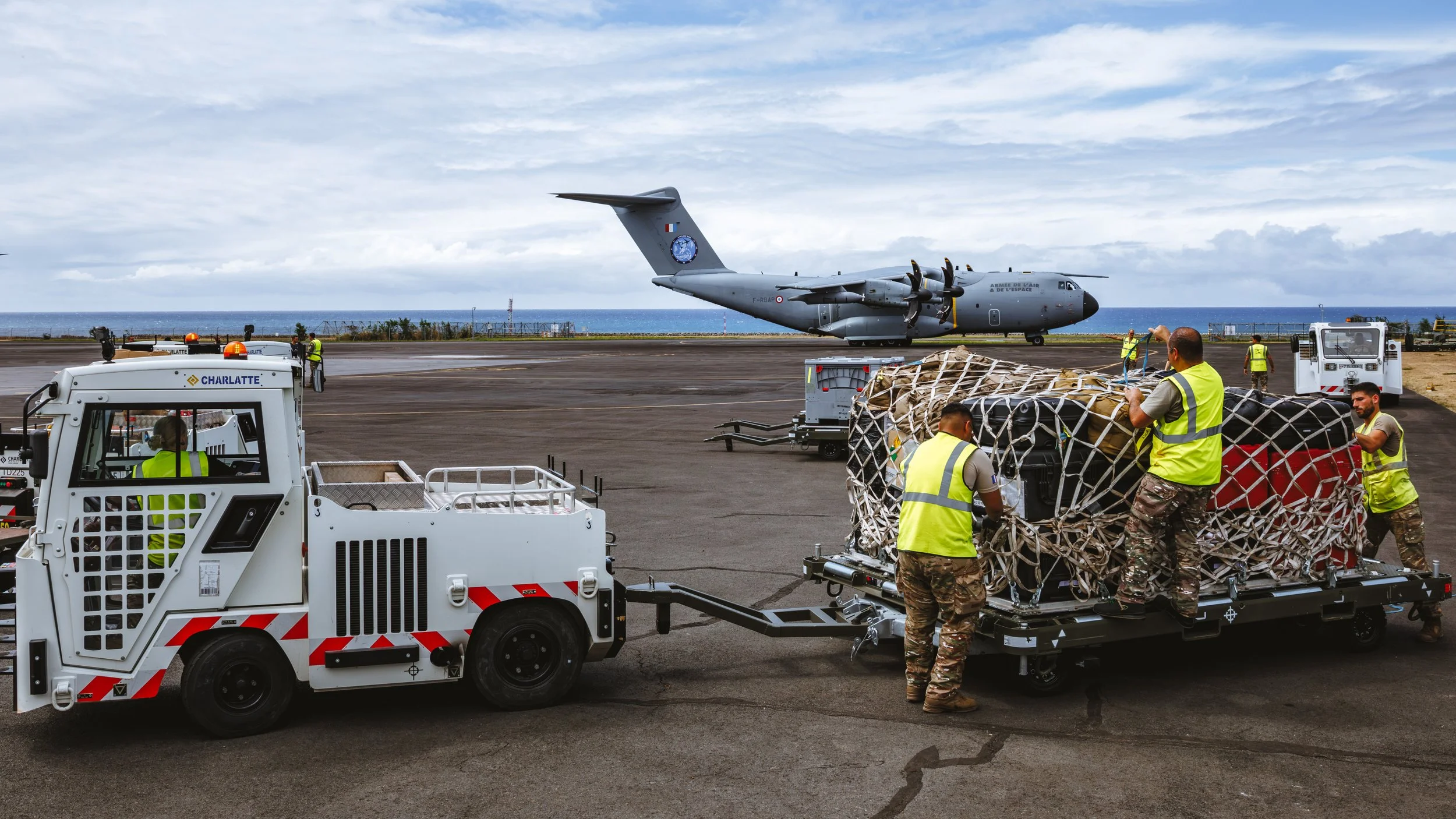
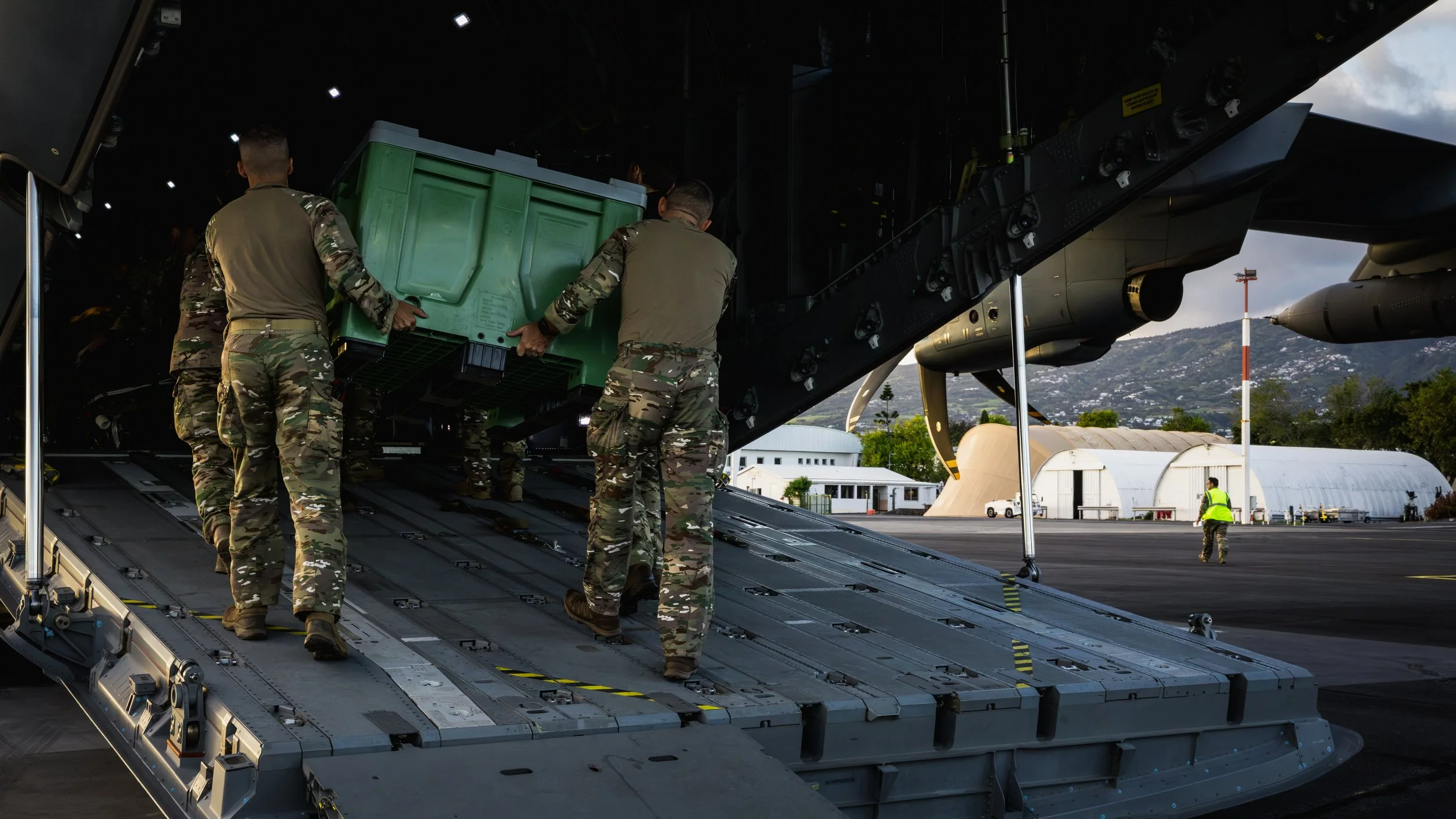
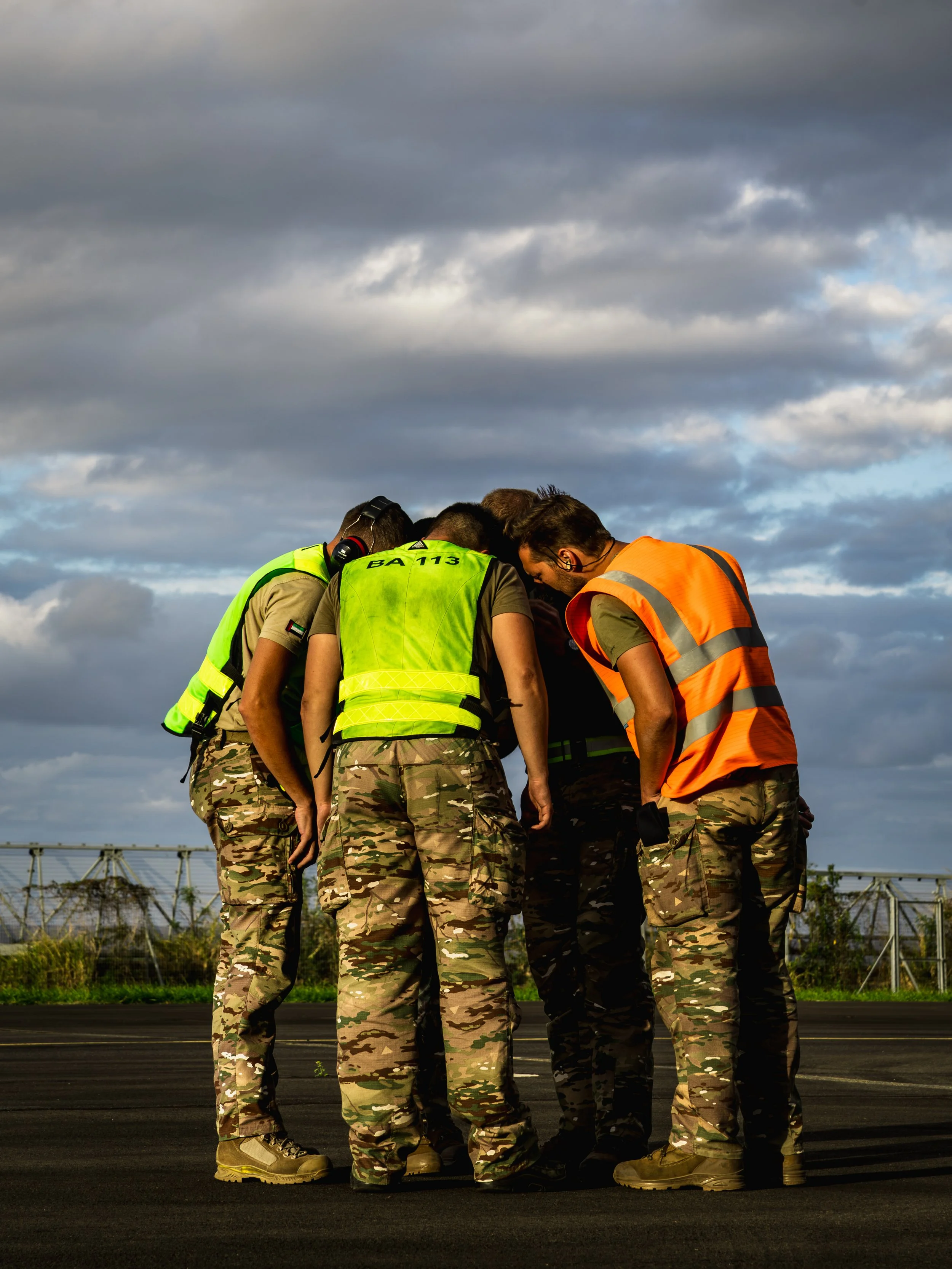
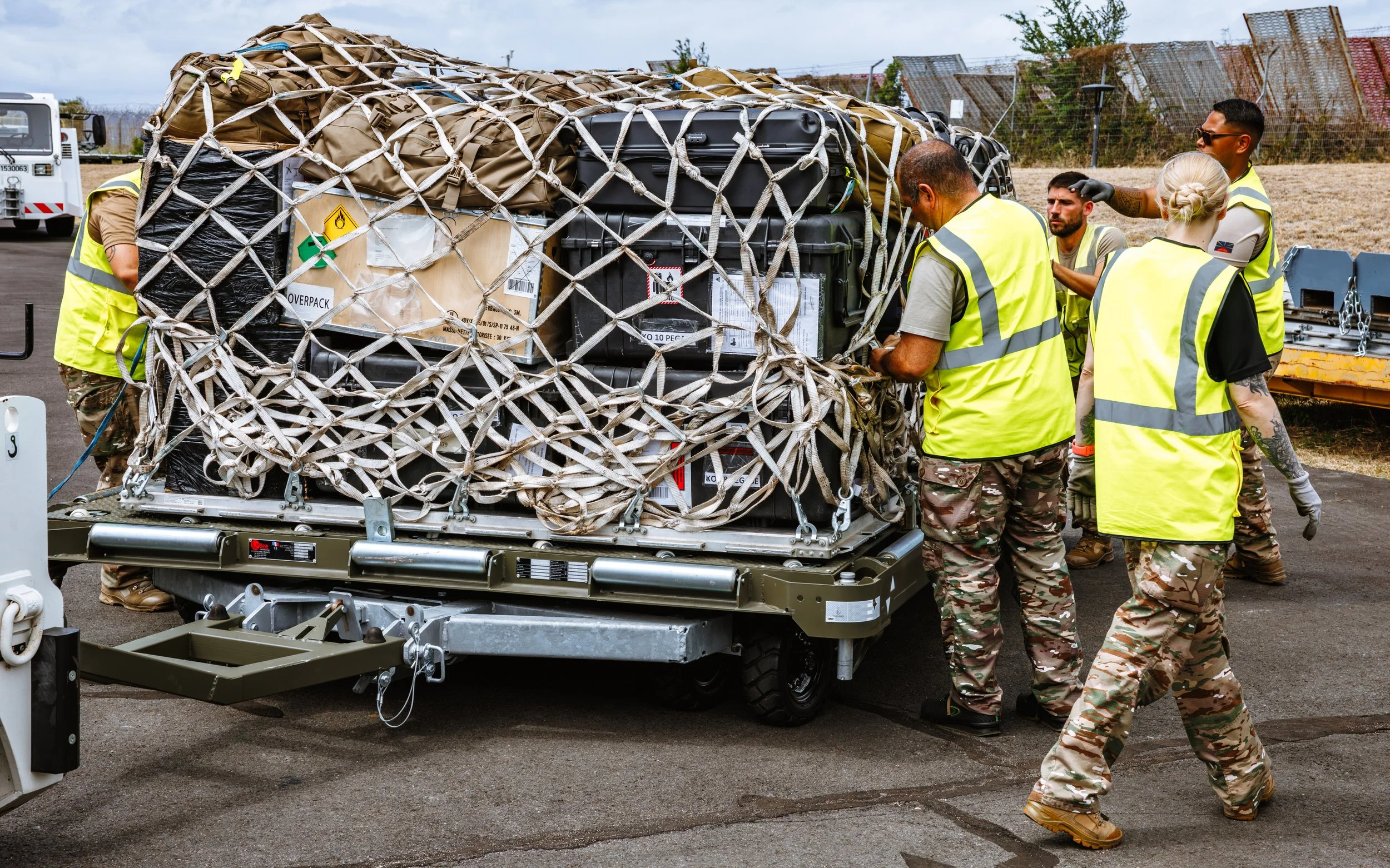
The logistics team works throughout an entire stop, but the final 24 to 48 hours before departure are especially intense. With a team of only around ten personnel in the logistics element described to Steel Wing Stories, the task is to track, unload, prepare and reload the equipment carried by the aircraft as well as the personal effects of the deployed personnel.
The challenge is not simply volume. Some items are flammable or otherwise classified as dangerous goods and must be handled with the appropriate precautions. Loads also have to be positioned correctly inside the aircraft. Individual items, pallet positions and overall mass limits cannot be treated independently: the final load must comply with the aircraft's loading constraints while still placing the right equipment at the right destination.
That last point becomes especially difficult on a deployment in which the force splits between locations. The deputy mission commander identified freight and personnel management as the most complex part of coordinating the Rafale, MRTT and A400M across multiple stages. The same people do not necessarily board the same aircraft from one stop to the next, while a particular maintenance kit may be required at only one of the destinations.
Everything therefore has to be ready before H-hour - the planned departure time. The aim is to avoid a delay that might propagate into the rest of the air plan. This makes logistics an operational function, not simply a support activity conducted behind the flying program.
“The main challenge is the logistics of freight and people. From one stage to the next, the requirements change.”
A Mission That Began a Year Earlier
The visible deployment lasted around forty days. The planning effort lasted much longer.
In the public eye, PEGASE begins when the aircraft leave their home bases. In practice, the mission starts roughly a year earlier. A small Core Planning Team of around twenty people meets progressively more often as departure approaches: initially once a week, then two or three times weekly as the final details converge.
The subjects are broader than flight planning. The team estimates personnel requirements, checks individual readiness, visits future operating locations, organises accommodation and transport, confirms catering and suitable sanitary conditions, and coordinates flying activities that must also meet the expectations of partner nations.
For the Rafale chief mechanic, preparation began more than six months before departure. From February, reconnaissance visits to sites including Japan, South Korea, Indonesia and India were used to check infrastructure and determine what local support could be relied upon, allowing the technical detachment to travel with the lightest practical footprint.
By the time PEGASE 26 became visible to the public, much of the decisive work had already been completed.
Keeping the Rafales Available
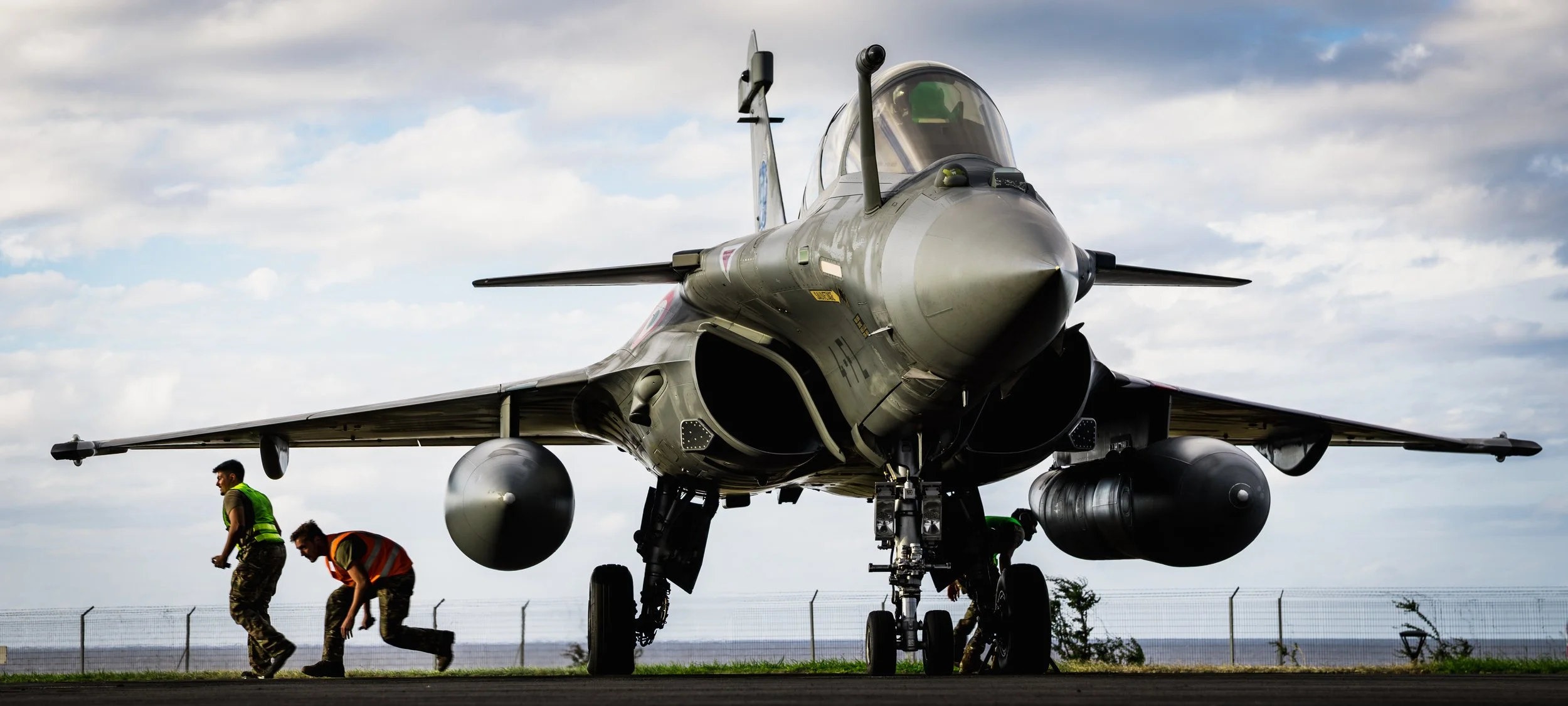
For the Rafale maintenance team, a global deployment starts with risk reduction. The technical detachment described by its chief mechanic included 33 mechanics across PEGASE, with 18 present at La Réunion while the remainder supported the other element of the deployment.
Because everything has to travel by air, the maintenance team cannot take a complete home-base workshop with it. Equipment, ground-support material and spares have to be selected. Historical failure data from previous deployments is used to help decide which components are most likely to be needed, balancing probability against transport volume and weight.
The aircraft themselves were prepared around the expected workload. Flying hours were estimated, a margin was added and the four deployed Rafales were prepared to reduce the likelihood of heavy maintenance away from home. Their engines were changed before departure to provide high remaining life, while other components were selected or prepared with the same objective. Reliability also influenced which individual airframes were chosen.
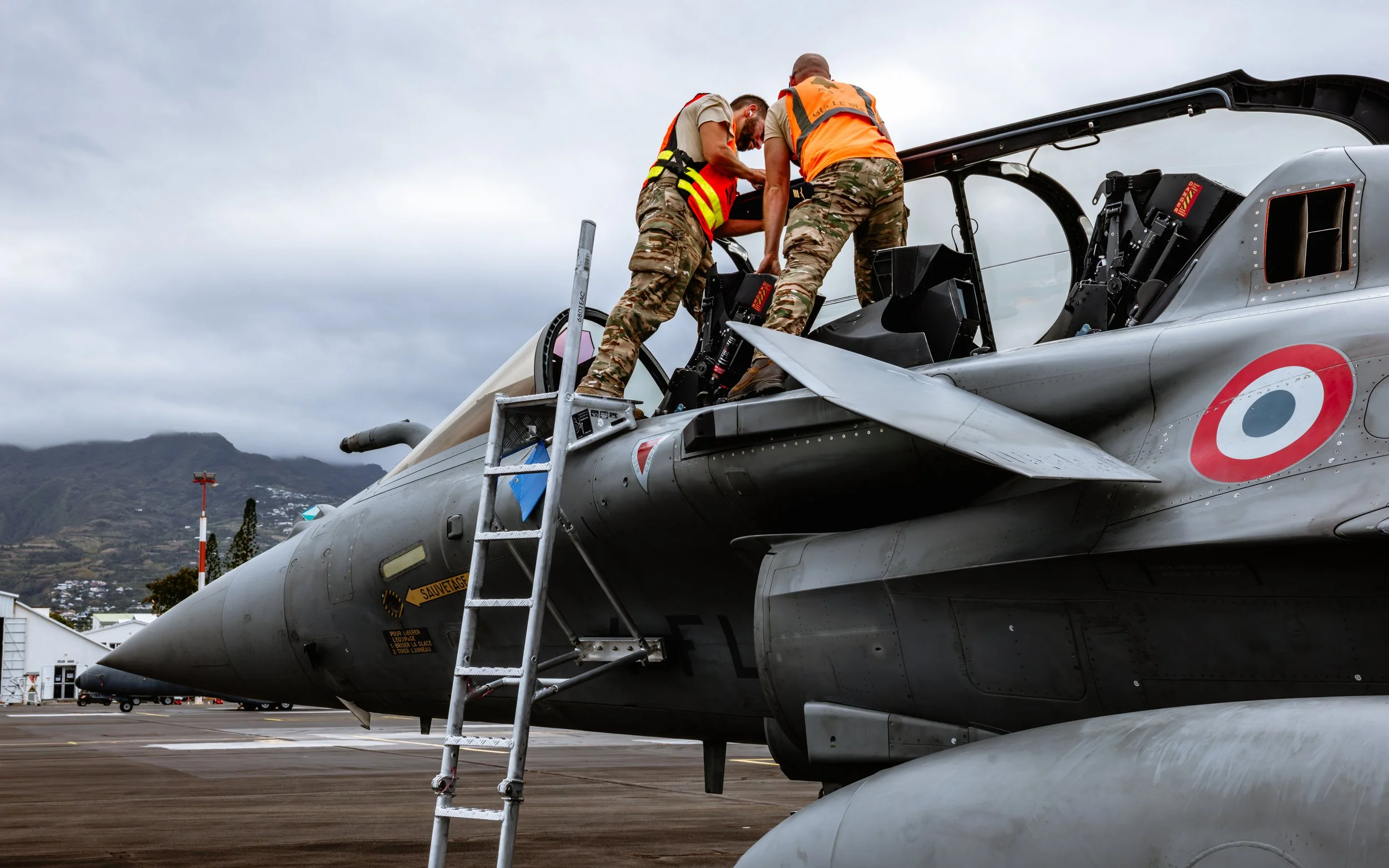
The maintenance organisation combines several specialities. The 'pistards' handle the immediate flight-line preparation and recovery of the aircraft. Other personnel cover mechanical systems, avionics, weapons, ground-support equipment, logistics and structure. The chief mechanic's role is to coordinate those specialists and arbitrate when several teams need access to the same aircraft at the same time.
After landing, the priority is first to make the aircraft and crew safe. Flight-line personnel confirm safety devices with the pilot, inspect tyres, look for leaks while hydraulic pressure is still present and then begin the post-flight inspection. Visual inspection is complemented by data downloaded from the aircraft, allowing the maintenance team to identify faults that would not be apparent from an external walk-around.
Long missions also introduce specific preventive actions. For flights expected to exceed around three hours, the Rafale undergoes a specific preventive oil-servicing procedure while the oil is hot.
For him, however, the most important part of the job is decision-making. When a technical case approaches the limit of what is directly permitted by documentation, specialists provide their analysis and the chief mechanic must decide whether the aircraft can fly, whether a waiver should be requested or whether it must remain on the ground. The mission matters, but it never removes the obligation to maintain the required level of flight safety.
“The most satisfying moment is when you see them come back and know the aircraft did not limit the mission.”
Technical success is therefore measured as much at recovery as at launch.
The workload behind that result is largely invisible. The chief mechanic estimated that technical teams are typically present around two hours before the first departure and can remain until roughly two hours after the final landing. What spectators see for a few minutes in the air may therefore sit on top of many hours of preparation, inspection, fault-finding and logistics.
The Fighter Pilot: Endurance Before Performance
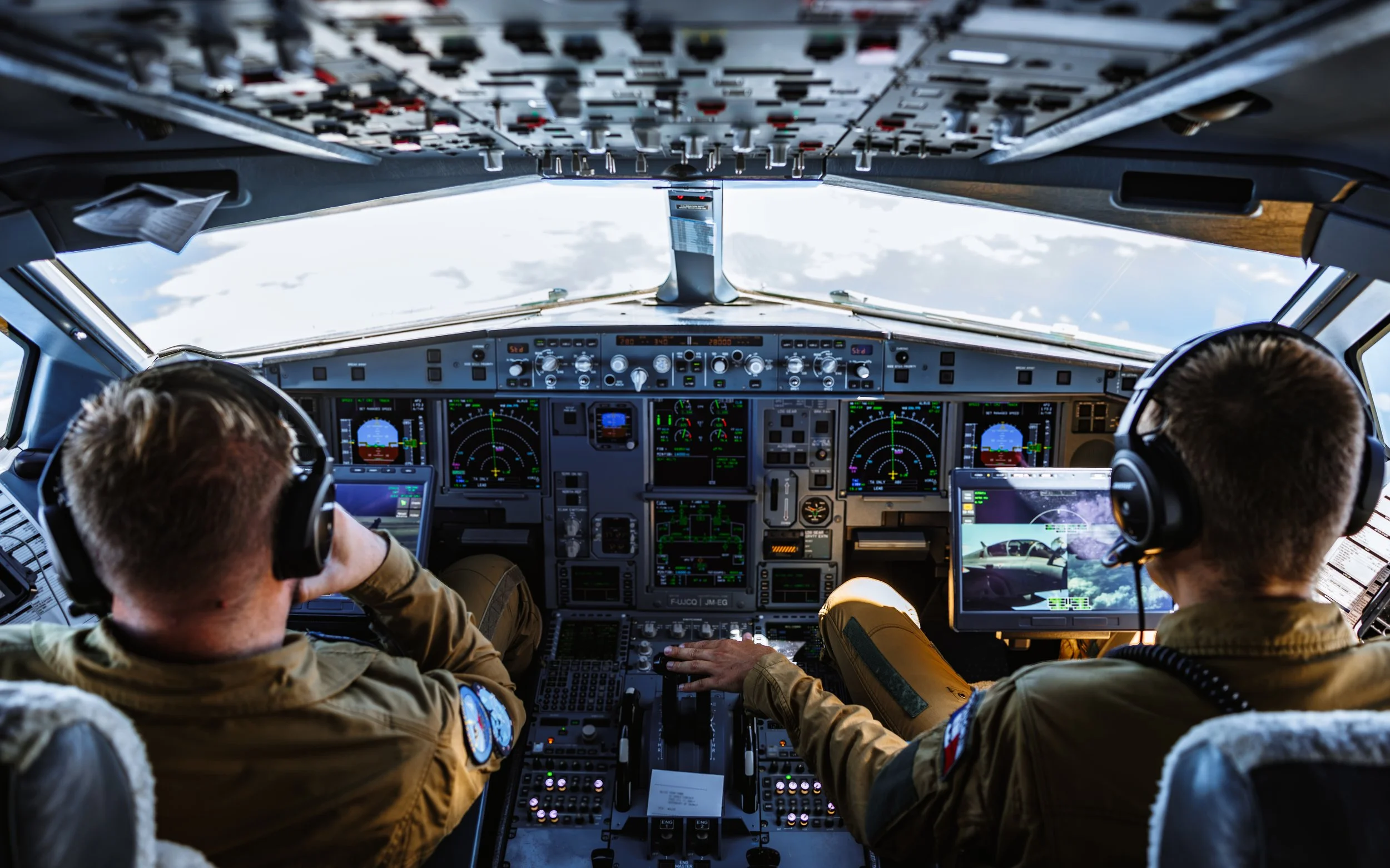
From the Rafale cockpit, long-range flying places unusual demands on concentration before it places unusual demands on aircraft handling.
The convoy is built around close coordination between Rafale, A330 MRTT and A400M crews. On some stages the different aircraft depart from separate bases and must meet at a precise point in space and time. Radio and SATCOM help maintain that coordination, with timing precise enough for the fighters and tanker to join and begin the planned refuelling sequence.
The technical act of flying the Rafale does not fundamentally change because the flight is long. The human problem does. The northern leg towards Alaska ran for more than ten hours, while Indian Ocean sectors approached seven and a half hours. In a fighter cockpit, those durations require deliberate management of rest, food, hydration and concentration.
Attention cannot remain at maximum intensity for the entire flight. The challenge is therefore to manage energy and then deliberately raise the level of focus before the phases that demand it most.
Air-to-air refuelling is one of those phases. It remains a precise manual task performed close behind a large tanker, with the fighter's probe having to engage a relatively small drogue. Fatigue can accumulate over the preceding hours, but the contact itself still demands full concentration. If the fighter cannot receive the fuel required for the next segment, the crew must use the diversion and contingency options planned before departure.
Repeated refueling never becomes entirely routine. Experience improves technique and judgement, but it does not remove the effect of turbulence: every receiver is still working with the same moving basket in the same air mass.
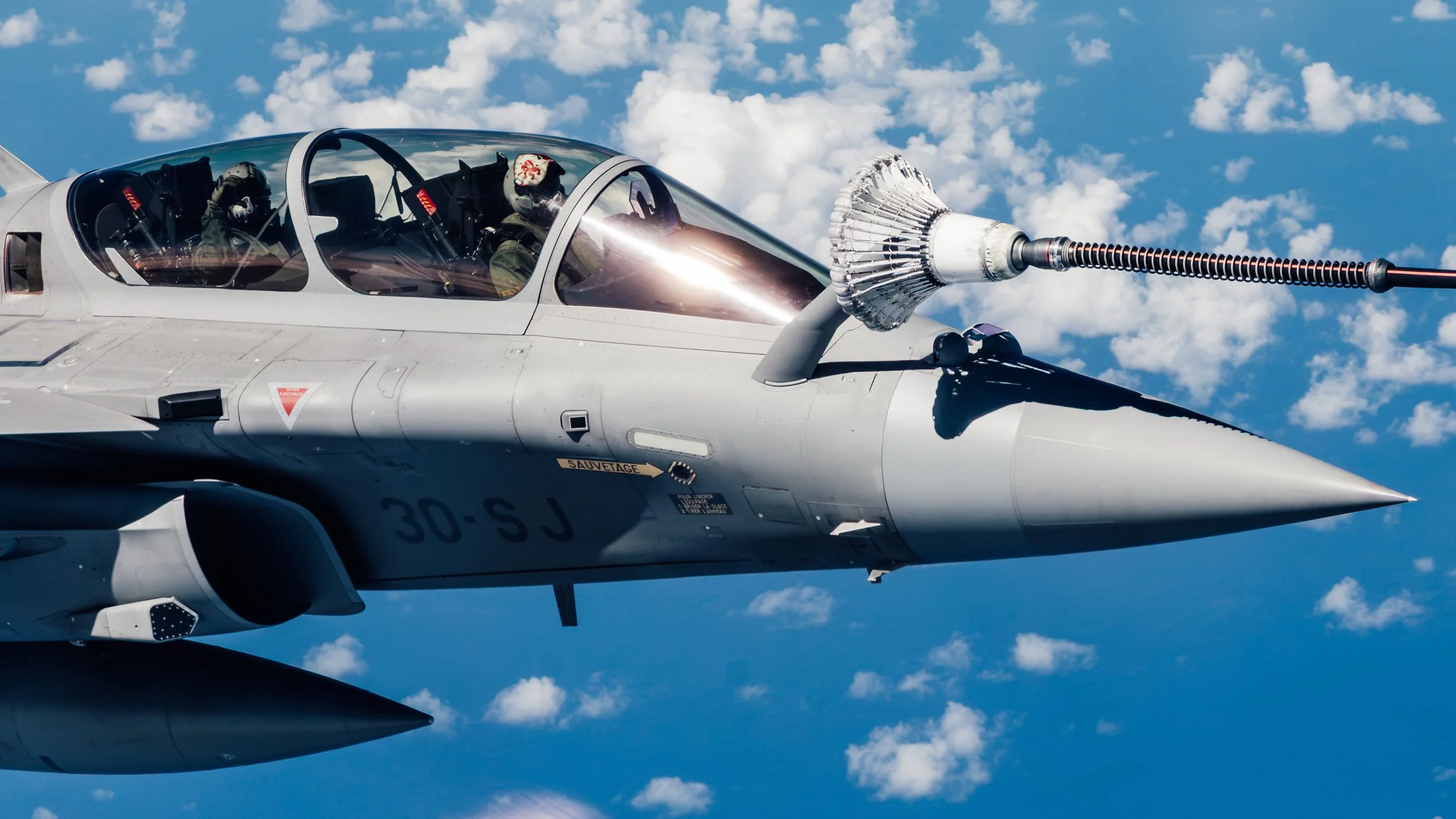
“Whatever the level of qualification or experience, everyone is equal behind the basket when the turbulence arrives.”
PEGASE also relies on crew rotation. There are more pilots than aircraft, allowing personnel to rotate between stages during a deployment in which flying continues day after day. The minimum standard is operational qualification, while the detachment also includes two-ship leaders and four-ship flight leaders. The pilot met at La Réunion was qualified as a two-ship leader.
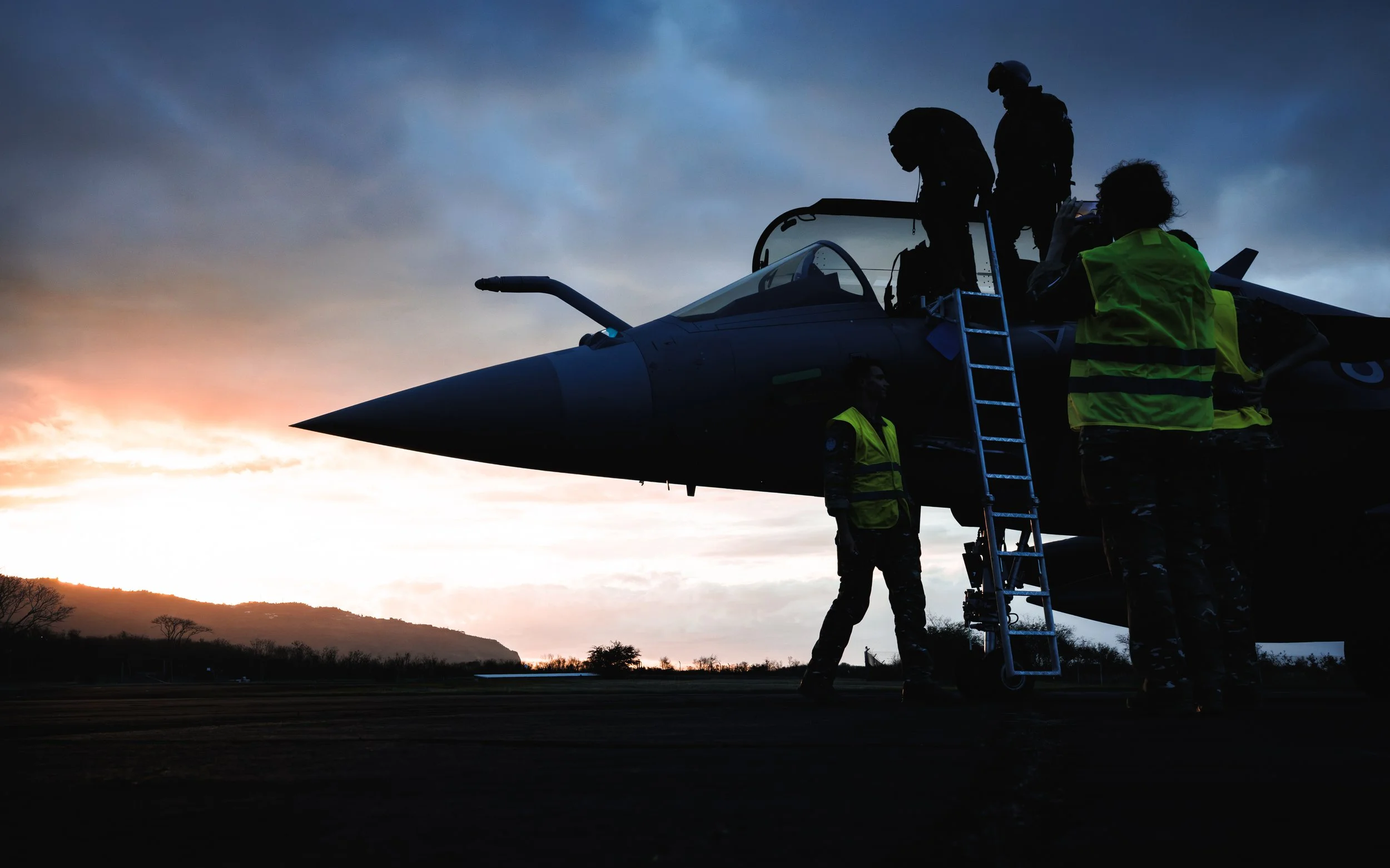
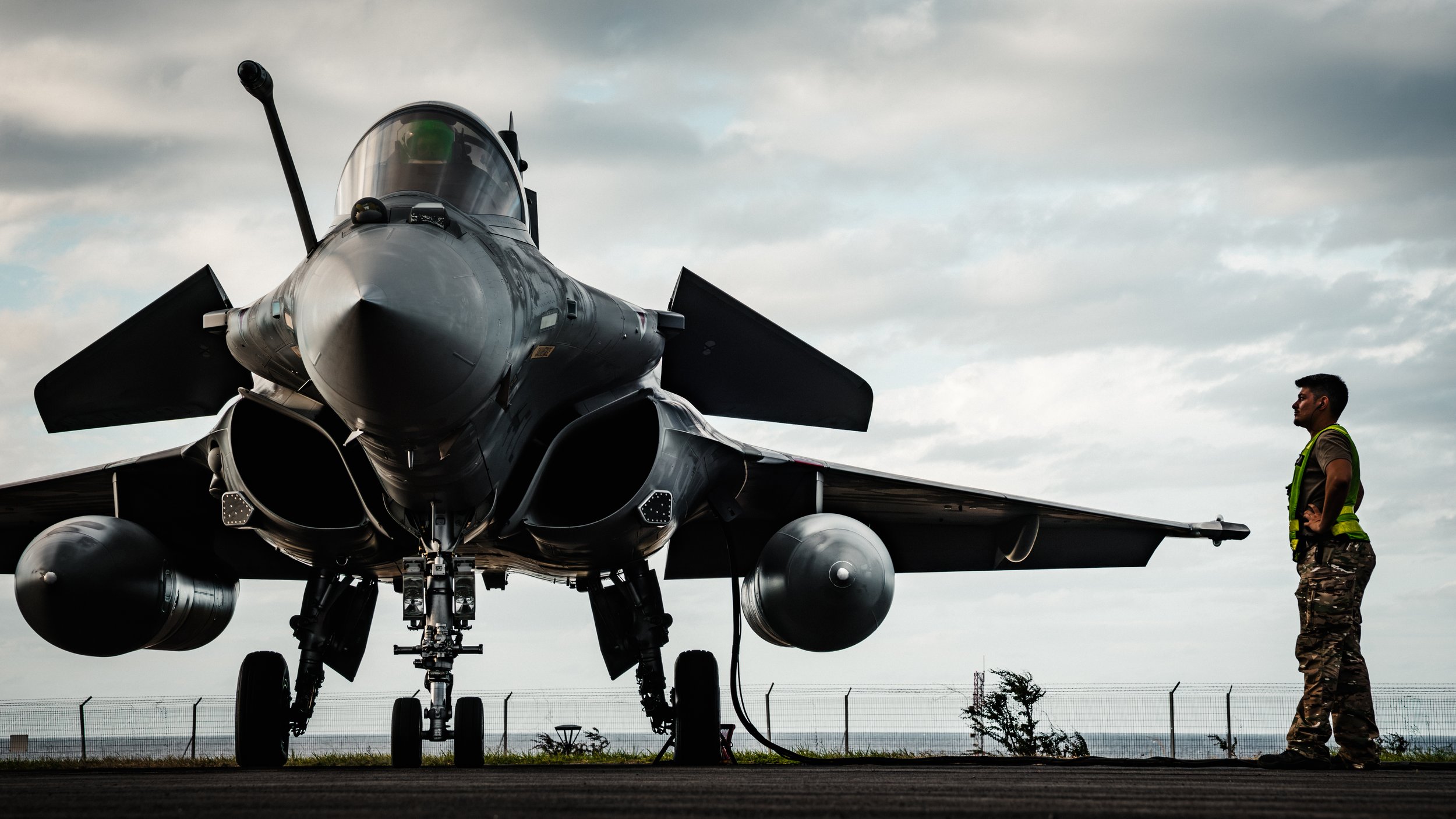
The airborne workload rests on an equally important relationship with the personnel on the ground. The pilot described himself as the last link in a much longer chain. The confidence is reciprocal: pilots trust the technical team to present an airworthy aircraft, while the maintenance team has the authority to stop or delay a flight if something is not right.
Inside the Phénix: The Third Crew Member
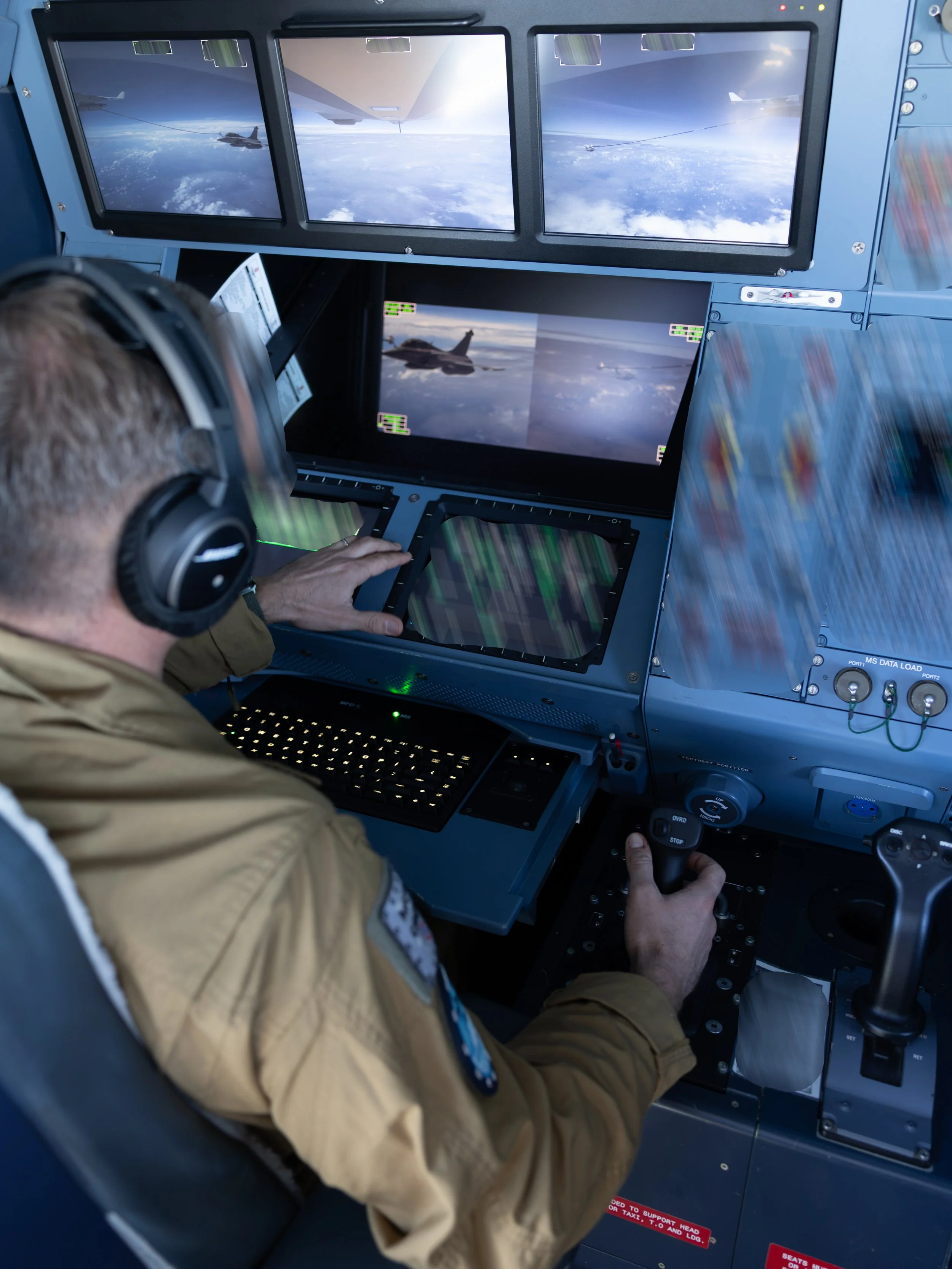
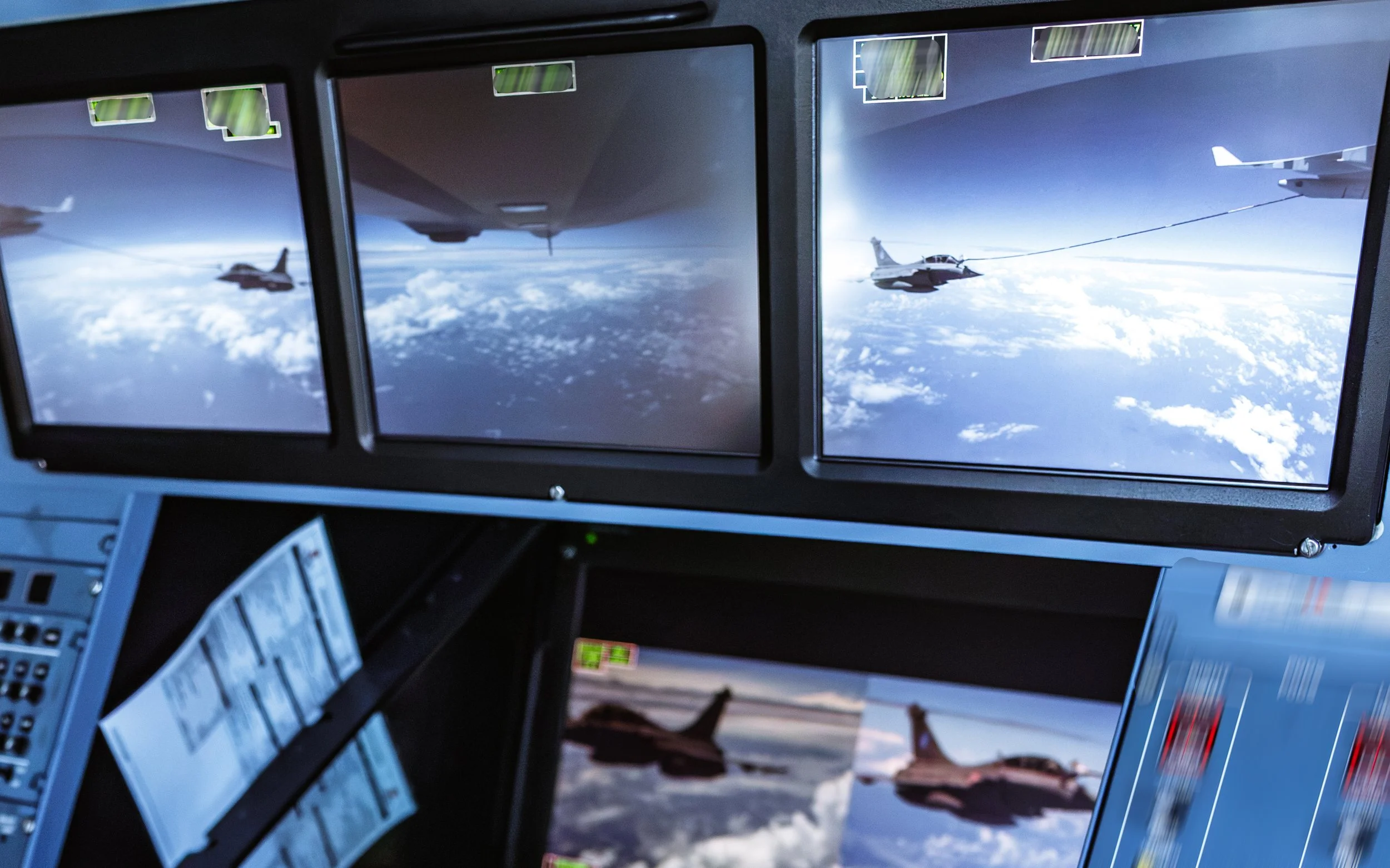
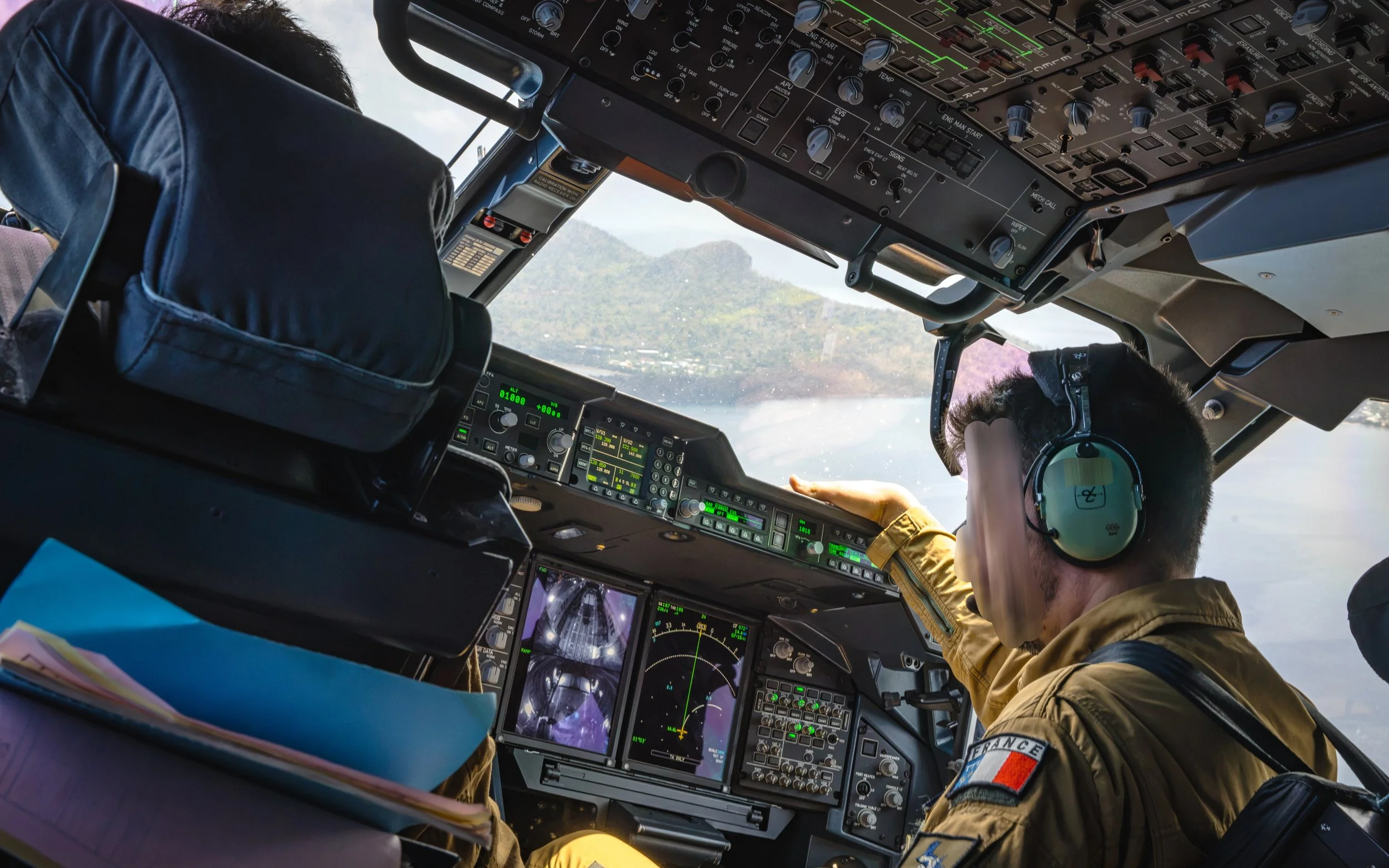
The refuelling contact looks very different from the tanker. At the A330 MRTT Air Refueling Operator (ARO) station, the entire receiver sequence can be monitored and controlled.
During refueling, the ARO deploys and manages the refuelling system, monitors its condition and manages the receiver through each stage of the refuelling sequence. The fighter first arrives in an observation or echelon position, then is cleared behind the drogue and finally cleared to make contact. The ARO watches the weather and turbulence and can delay the sequence when conditions are not suitable. The fighter pilot retains his own judgement and can remain in a waiting position if the contact does not feel safe.
Once the fighter is connected, the ARO monitors fuel pressure, temperature, transfer rate, tanker speed and altitude, as well as the position of the hose within its permitted forward and aft limits. Signal lights on the pods provide the receiver with information on system status and hose position.
Having previously worked on the C-135, the ARO could compare the two systems directly. The MRTT's visual environment is a major improvement: the modern station provides a wide rear view and inspection cameras that can zoom onto the drogue or probe area when the crew needs to investigate an abnormal condition. There is still a trade-off, however. In turbulence, the flexible hose-and-drogue system can become difficult to stabilise, leaving the crew to wait for better conditions or adjust flight parameters rather than forcing the contact.
The aircraft itself automates much of the internal fuel management. Fuel computers determine which pumps to use according to aircraft balance, fuel state and the receiver's requirements. The crew can take manual control if a failure requires it, but under normal conditions the system manages the distribution while the ARO concentrates on the receiver and the transfer.
Refueling Is Only Half the Job
The more revealing part of the ARO's role lies beyond the drogue itself: on a long ferry, air-to-air refueling is inseparable from mission planning and fuel management.
Using Airbus mission-planning tools, the ARO works with the fighter formation to build the fuel plan around the route, altitude, expected consumption, required fuel at destination and the diversion airfields available if a refueling fails. The leader provides the desired fuel states at key points, and the planning system uses aircraft performance data to identify when fuel must be transferred.
That plan is then checked against reality in flight. The ARO asks for the fighters' actual fuel states and compares them with the estimate. If consumption, routing or conditions differ from the plan, the next refuelling can be replanned.
That is what makes a long-distance ferry one of the tanker crew's most demanding mission profiles. The contact is the critical event, but the broader task is continuous management of the package's ability to keep moving. Fuel, distance, diversions and timing are inseparable.
“For me, the convoy mission is the most complex type of mission we can do.”
The Phénix can carry up to 110 tonnes of fuel, refuel two combat aircraft simultaneously through its wing pods and transport passengers or freight over very long distances. Those figures explain the aircraft's strategic reach; the work at the ARO station shows how that capacity is converted into a usable fuel plan for the fighters.
The human dimension is equally important. The ARO summed up his place in the crew as being the "third man in the aircraft": two pilots fly the MRTT, but during refuelling, responsibility for operating the system and managing the receiver sequence rests with the ARO. For personnel who may have begun their careers in maintenance or avionics before moving into the airborne role, that responsibility represents a significant professional transition.
The A400M: Freight, SAR and a Second Refuelling Capability
The A400M's role in PEGASE is deliberately broad. During convoy stages its hold is heavily used for freight, moving the equipment required to sustain the deployment. The Atlas combines tactical transport with strategic reach and can move personnel and equipment, operate from austere airfields, conduct airdrop missions, support special forces, perform medical evacuation and provide air-to-air refueling.
During the longest fighter transfers, the A400M also contributes to search-and-rescue planning. The crew identifies the segment of the route on which an ejection would create the greatest survival problem for the fighter crew, then coordinates its timing with the Rafale-MRTT package so that the aircraft remains suitably positioned relative to that critical area.
If required, the aircraft can move towards the ejection area and drop a dedicated SAR package containing a larger life raft and survival equipment, extending the crew's survival time while rescue forces are mobilised.
The A400M can also refuel Rafales. The basic procedure is broadly comparable with MRTT hose- and-drogue refueling, although speeds and aircraft characteristics differ. During the missions discussed at La Réunion, the A400M refuelling role was limited to French Rafales; wider use depends on technical and procedural compatibility, certification and the necessary agreements.
Crew Culture and Interoperability
For the A400M community, working across specialities is not exceptional - it is part of the culture of military transport aviation. Pilots, loadmasters and other crew members operate through qualifications and clearly defined responsibilities, with the relevant qualification able to matter more than rank for the task being performed.
That mindset extends naturally into joint activity. At La Réunion, the A400M detachment worked with the 2e RPIMa (2nd Marine Infantry Parachute Regiment) on mission profiles familiar to the transport community. What made PEGASE unusual was less the nature of each individual task than the scale, duration and geography across which those tasks had to be repeated.
Indonesia provided a different form of interoperability. Because the Indonesian Air Force also operates the A400M, French crews were able to work with personnel using the same platform. Once the crews met in person, technical discussion became productive very quickly: in the words of the French pilot, they were "speaking the same language".
The same pattern appeared elsewhere. Rafale crews exchanged methods with partner fighter forces, while the MRTT community discussed tanker operations with South Korean crews and exchanged practices with Japanese and American personnel. PEGASE therefore combines flying activity with a less visible exchange of procedures, techniques and experience that makes future cooperation easier.
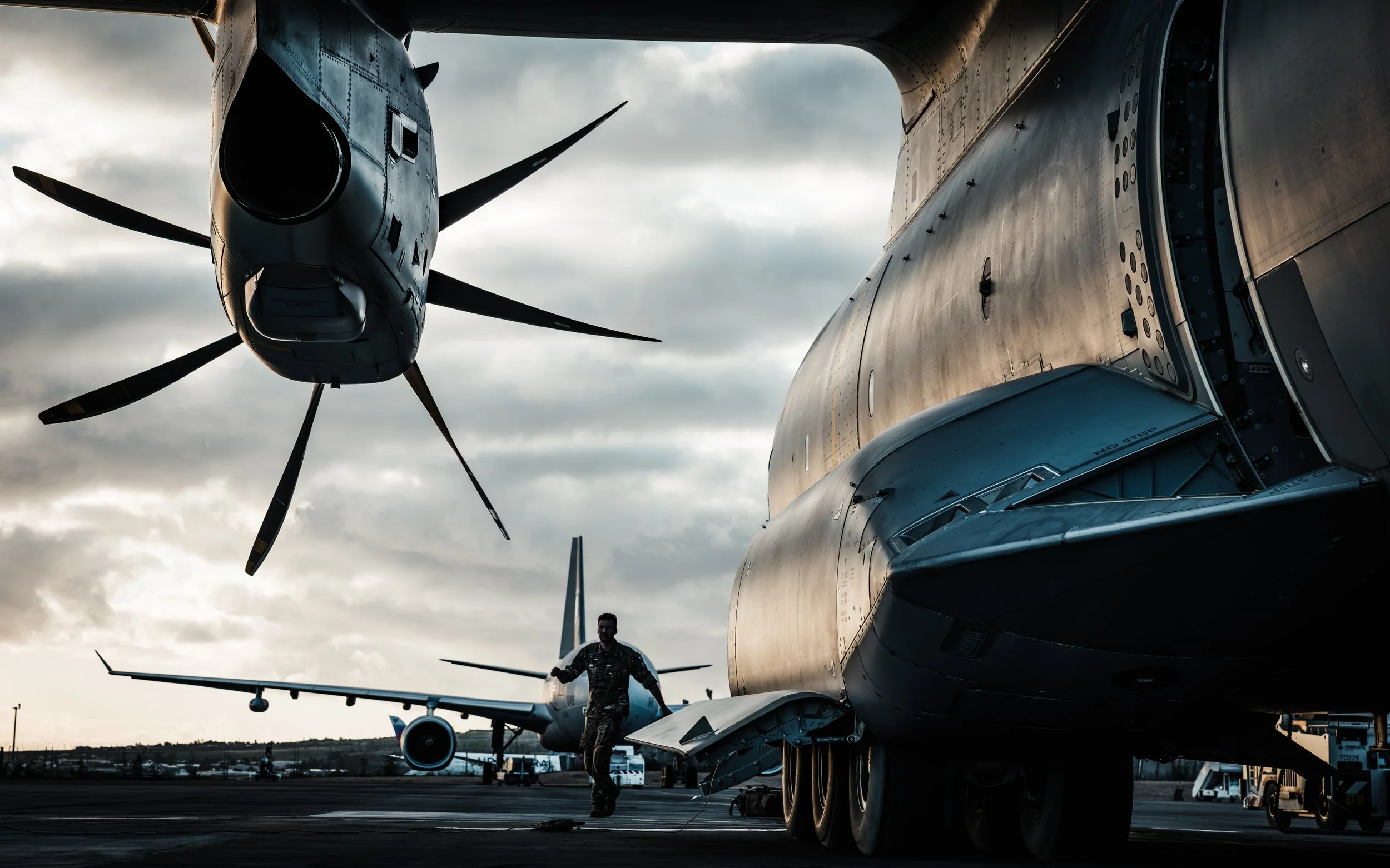
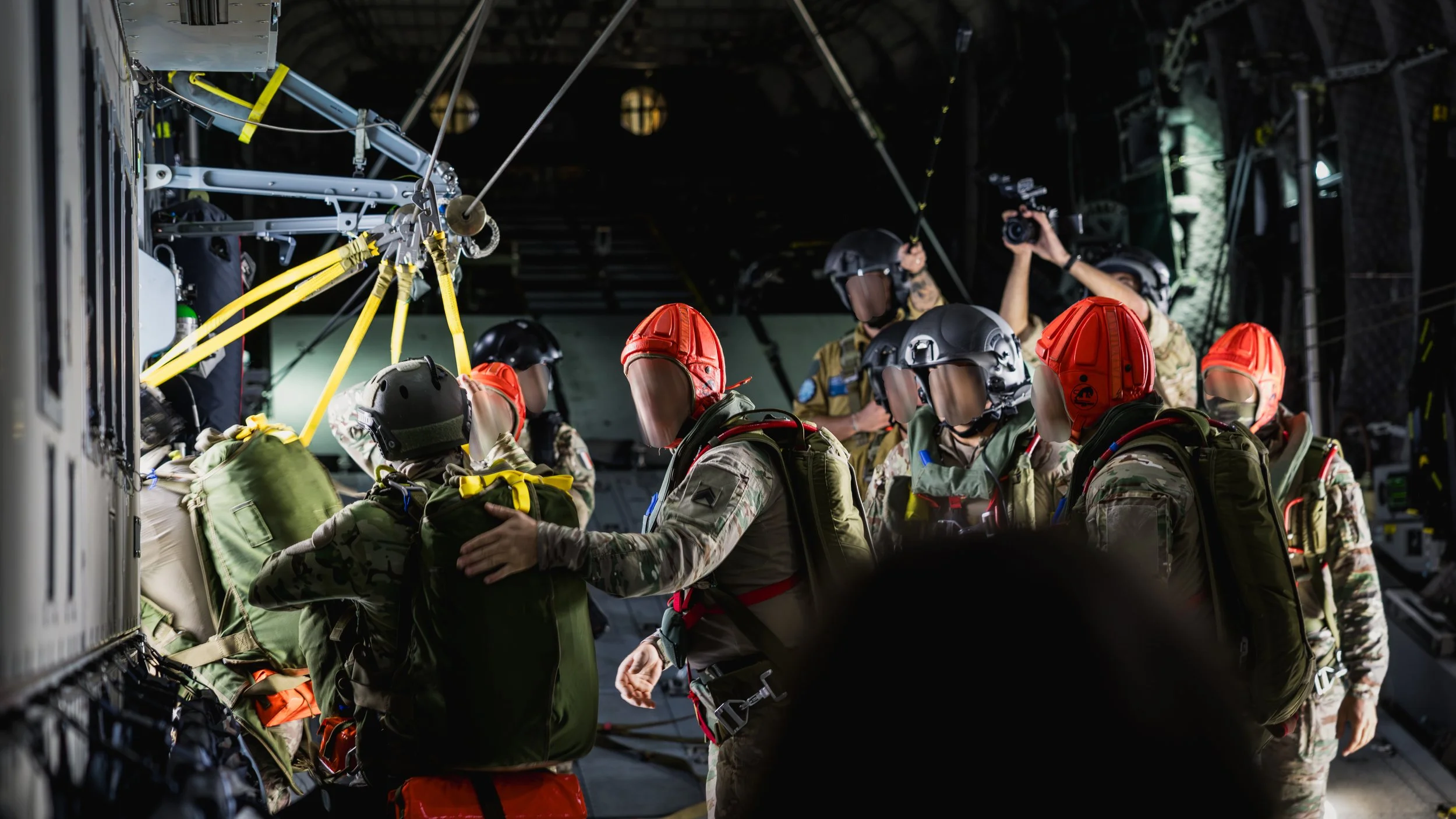
“In transport, working as a crew is in our DNA. We also have a culture in which qualification comes before rank.”
La Réunion to Egypt: Flying the Plan
By the morning of the convoy, the mission had already been translated into a set of timings, fuel states, rendezvous points, communications procedures and contingency options.
The Rafales and MRTT had to depart, join and settle into the package. The fighters then had to take fuel at the planned stages while the tanker crew continuously compared the real mission with the one built on the ground. Weather could still affect the contact itself. During the refuelling sequence observed by Steel Wing Stories, turbulence was sufficient for the refuelling operator to delay clearance until the receiver could make a safer approach.
That small decision illustrates the relationship between planning and execution. The timeline matters, but it does not override flight safety. The fuel plan matters, but it can be recalculated. The route matters, but diversion airfields have already been studied. The package is designed to remain coordinated without being rigid.
Adaptation had already been tested earlier in the deployment. As a typhoon approached Japan, the team assessed three options: leave 24 hours early, delay by 48 hours or retain the original plan. Each choice affected flying, logistics, accommodation, diplomatic clearances and the next destination, so the decision had to be built from the assessments of every relevant branch rather than treated as a purely meteorological problem.
This is the operational logic behind the 'What If' section of the convoy briefing. A global deployment cannot prevent every technical fault, weather change or external constraint. It can, however, decide in advance how much flexibility it has when those events occur.
Egypt: The Final Operational Phase
Egypt formed the final major stage of PEGASE 26, with the French detachment participating in Exercise AMUN 26. For AMUN 26, the French contingent assembled in Egypt comprised five Rafales, one A330 MRTT and one A400M - a larger fighter element than the four-Rafale core PEGASE package - operating alongside Egyptian Rafale, F-16 and MiG-29 aircraft. France and Egypt maintain a long-standing defence relationship built around training, exercises and equipment cooperation, including a shared Rafale capability.
For PEGASE, the significance of reaching Egypt was not simply geographical. After the long route through the Arctic and Indo-Pacific, the force moved directly into another period of operational training with the Egyptian Air Force. The deployment therefore demonstrated the point in practice: long-range projection had to end with aircraft, people and support elements coherent enough to keep operating after arrival.
That is the standard by which the deployment's autonomy should be judged: not by distance alone, but by the ability to preserve combat capability across that distance.
Operational Preparation and Air Diplomacy
PEGASE 26 was framed as a mission of operational preparation and air diplomacy rather than an opération extérieure (OPEX).
That distinction matters in French military terms. The deployment uses the skills built throughout the year in operational units and places them inside a larger, unusually demanding framework. Fighter crews practise long-distance projection and multinational combat activity. Tanker crews manage complex fuel plans and receiver coordination. Transport crews sustain the force and cover contingency missions. Maintainers work with a limited travelling inventory. Logistics specialists move sensitive freight and keep the timetable intact. Command teams coordinate permissions, partners and multiple simultaneous lines of activity.
The result is a test of the system as a whole.
The deployment is also a test of the team. At the beginning, personnel drawn from different units do not necessarily know one another well and processes can feel less fluid. As relationships develop and routines stabilise, the same group becomes capable of solving problems that might have seemed much harder only days earlier.
The maintenance detachment offers a concrete example. Roughly half of the Rafale mechanics came from Mont-de-Marsan and the other half from Saint-Dizier. They do not necessarily work together every day at home, yet PEGASE required them to function as one technical team for weeks, far from their normal support structure.
Projection Is a Collective Capability
The easiest way to describe PEGASE 26 is as a world-spanning deployment of Rafales, A330 MRTTs and A400Ms. It is accurate, but incomplete. The aircraft are the visible element; the capability lies in the network of people and decisions that keeps them moving and ready to operate.
The Rafale pilot can focus on the mission because he trusts the mechanics. The mechanic can release the aircraft because specialists provide the analysis needed to make a technical decision. The ARO can build and update a fuel plan because the fighter formation provides the required fuel states and diversion assumptions. The A400M crew can position for SAR cover because its timeline has been coordinated with the fighter-tanker package. Logistics can load the right equipment because the next stage has already been planned. Command can adapt to weather because each branch has explained the consequences of change.
The La Réunion-to-Egypt leg brought those dependencies together. The Rafales depended on tanker support for range, on the A400M for freight and contingency coverage, on mechanics for availability, on logistics for the equipment needed at the next stop, and on planners for the diplomatic and operational framework that allowed the package to move between regions.
Behind the flying programme, a Core Planning Team had been working for roughly a year. Technical teams prepared aircraft months in advance. Logistics personnel spent the final 24 to 48 hours of each stopover making sure freight and dangerous goods were correctly loaded. Mission planners turned the route into join-ups, refuelling points, diversion options, communications plans and no-go criteria. Once airborne, crews continued to compare that plan with reality and adapt it when necessary.
PEGASE 26 therefore tested something broader than aircraft performance: whether the French Air and Space Force could move a combat-air package across intercontinental distances, sustain it with a relatively small footprint, work with partners along the route and retain the ability to conduct meaningful flying activity after arrival. Range was only the first problem. The harder task was arriving with the force still ready to work.
“PEGASE 26 is a demonstration of the French Air and Space Force’s operational and logistical autonomy, sustained for forty days across nine countries. That is something unique.”
Acknowledgements
Steel Wing Stories would like to thank the French Air and Space Force personnel who made this coverage possible, including the PEGASE 26 command teams, Rafale aircrew and maintainers, A330 MRTT crews, A400M crews, logistics personnel and all those who shared their time, experience and expertise during the La Réunion stage and the onward convoy towards Egypt.
Particular thanks go to the Public Affairs and communication teams for their continued support on the ground throughout the deployment. Their assistance made this coverage possible, but their contribution extends far beyond supporting visiting media. Much of their work takes place behind the scenes, coordinating access, documenting the mission and helping bring the scale, complexity and human dimension of PEGASE 26 to a wider public.
Their work, like that of many of the personnel involved in the deployment, is often largely invisible, yet remains essential in allowing the mission and the people behind it to be properly understood and showcased.